

1. A Sealed Letter
The excavation season of 1921–1922, at Deir el-Bahri on the west bank of the Nile.
A Metropolitan Museum of Art expedition was investigating the interior of a tomb belonging to a man named Meseh. In the dim chamber, a bundle of yellowed papyri emerged. Some were still neatly folded, tied with string, their clay seals intact. Four thousand years earlier, someone had carefully written these letters to send home. They had never reached their recipients.1
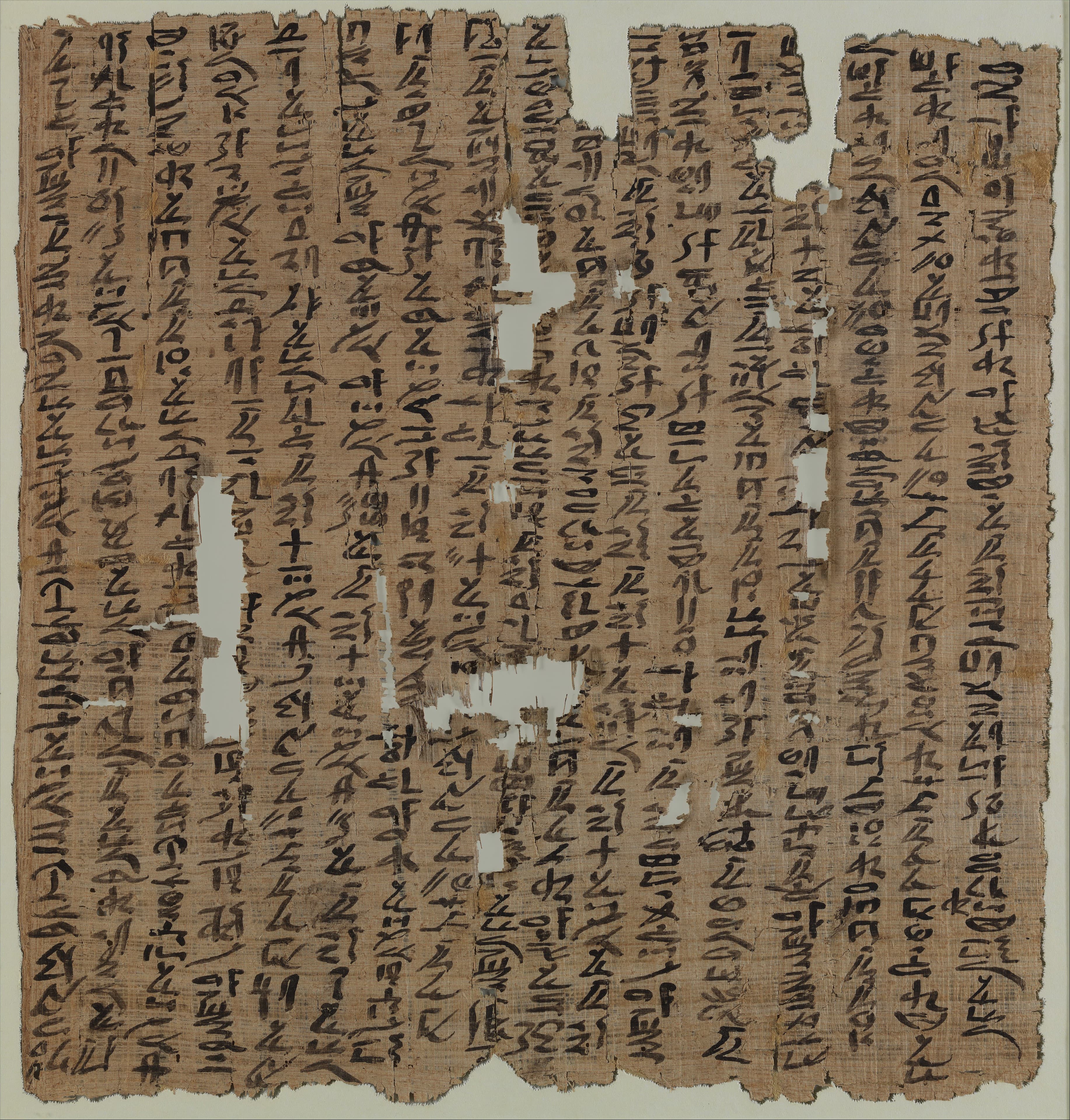
Figure 1. Heqanakht’s first letter, ca. 1961–1917 BCE, Metropolitan Museum of Art 22.3.516. The writing preserved on the folded letter is shown here unfolded.
The Metropolitan Museum of Art · CC0 · Original and source
The sender was Heqanakht. He was neither a pharaoh nor a general commanding an army. He was a priest who performed the funerary rites of a deceased Theban notable, and a steward who kept close watch over the land and grain that supported those rites. Far from home, he sent his family lengthy instructions.
The previous year, the Nile had not risen high enough.2
The dry fields beyond the water's reach had yielded less grain. The harvest was finally in, but the stretch of time until the next one seemed far longer than the grain in storage could sustain. Heqanakht's reed pen had little rest. Whom should he send to lease more land? How much grain should he allot to the worker sent on that errand? What rules must the family left at home observe? Among the dense lines of black ink running from right to left across the papyrus was this urgent injunction:
“Mind you that my barley seed is guarded.”3
In a hungry household, a sack of seed is the most perilous temptation. Grind a handful into flour, and tonight's sharp hunger can be eased. But that handful belongs to the life that must return to the fields next year. The barley was in the same storehouse, in the same sacks, yet each grain carried a different claim upon time. Some was for today's meals, some for wages, some for rent—and some, never to be touched, for the coming season.
In Part 7, we followed the collapse of Hammurabi's Babylon. Now we turn the clock back a little and look west, toward another great river. A little over half a century has passed since Ur's last king disappeared from the historical stage. While scribes along the Tigris and Euphrates counted barley on clay tablets, a priest beside the Nile pressed a clay seal onto a folded, tied letter, trying to safeguard a sack of seed.
When people think of Egyptian calculation, they often picture pyramids reaching into the sky. Here, however, our search for a civilization's calculations begins beside this small sack of seed. At the end of our journey, we will return to the letter that slept, sealed, in a dark tomb for four thousand years, and discover how it finally encountered the world again.
2. The Crowns of Two Lands
More than a thousand years before Heqanakht took up his reed pen, on the banks of that same river.
A ruler seized an enemy by the hair and raised a stone mace. His name was Narmer. The menacing scene is carved into a ceremonial stone slab made around 3100 BCE: the Narmer Palette. On one face he wears the white crown of Upper Egypt in the south. Turn it over, and the same king appears in the red crown of Lower Egypt in the north, marching proudly before the bodies of decapitated enemies.4
Two crowns, one kingship. The image condenses the intimidating authority of a ruler laying claim to both lands.
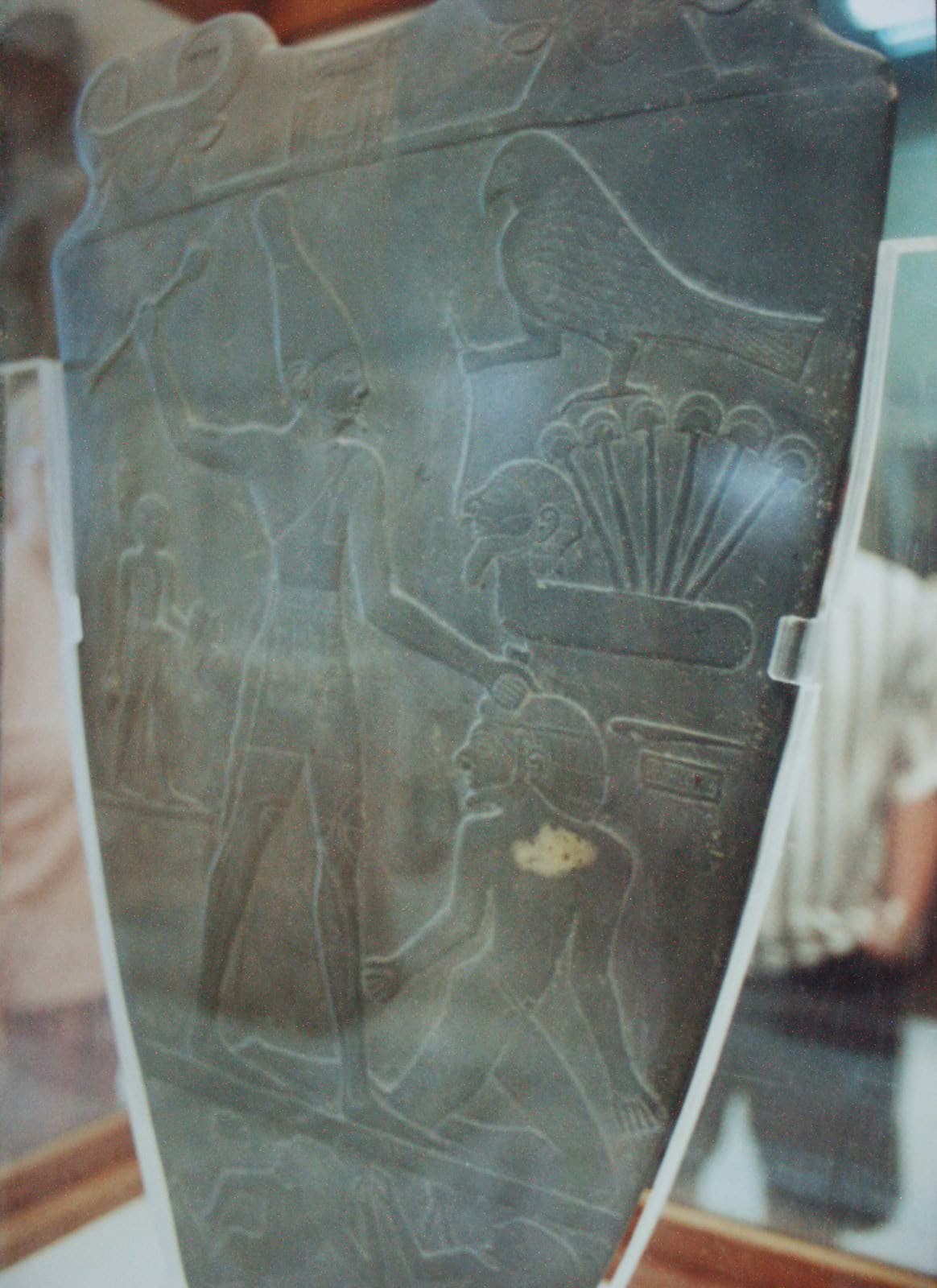
Figure 2. The smiting scene on the Narmer Palette, ca. 3100 BCE. The king wears the white crown of Upper Egypt.
Gary Todd · CC0 · Original and source
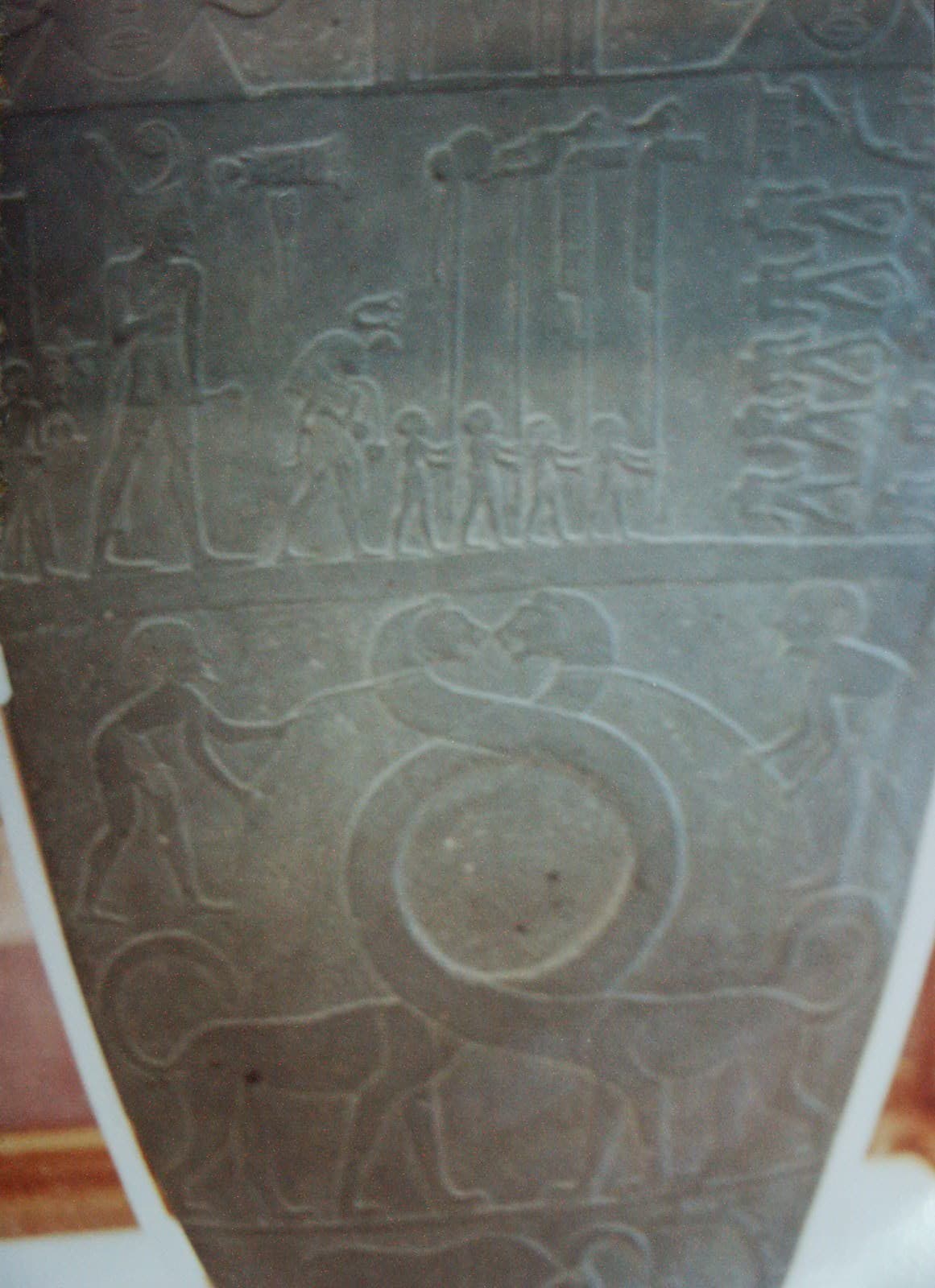
Figure 3. The other face of the same palette. In the upper procession, the king wears the red crown of Lower Egypt. Both images are modern photographs of the displayed artifact.
Gary Todd · CC0 · Original and source
In Egypt, “upper” and “lower” followed the river, not the orientation of a map. The Nile rises in the south and flows north to the Mediterranean. The upstream south was therefore Upper Egypt; the fertile delta downstream was Lower Egypt. The long, narrow valley and the broad, fan-shaped wetlands shared a source of life, yet the shape of the land and the texture of people's lives were distinctly different.
For farmers in this dry country, the life-giving rain they awaited was not simply rain falling over their own heads. Thousands of kilometers to the south, heavy summer rains over the Ethiopian highlands swelled the great river and sent it surging north through the desert. It soaked the parched plains, then slowly withdrew, leaving dark, fertile silt behind. This was why Egyptians called their homeland Kemet, the “Black Land”: the color of the rich soil the flood spread anew.
But the river did not return with the same generosity every year. If the water was too low, fields beyond its reach withered and famine followed. If the flow was too violent, embankments and villages were damaged by the current. The certainty of an annual return and a flood height suited to human survival were two entirely different matters.5
The river was both the source that fed the land and its most important transport route, binding north and south together. Grain from upstream and massive blocks from quarries traveled downriver on barges. Control of that waterway gave a ruler a decisive foundation for claiming both lands. The Narmer Palette contains no record of peaceful water allocation. It shows a defeated enemy crushed beneath a king proclaiming victory.
A crown could unite the two lands in an image. But collecting taxes across that vast territory every year and carrying grain to royal and temple storehouses could not be accomplished by a symbolic carving. That required the labor of many people, a substantial transport fleet, and, above all, administrative accounts that could keep track of goods in motion.
3. Boats Carrying Stone, a Settlement Baking Bread
The twenty-sixth century BCE, toward the end of Khufu's reign. The Tura quarries on the east bank of the Nile.
A fleet led by the overseer Merer was loading blocks of fine white limestone. These were casing stones, intended to give the pyramid a brilliant outer surface. The laden boats moored at She-Khufu for the night, then turned toward Akhet-Khufu—“Khufu's Horizon”—when morning came. Unloading the stone did not end the transport work. To collect the next load, the boats had to return to Tura. As they traveled between quarry and building site, the places where they stopped and the days when they moved accumulated, line by line, in Merer's journal.6
This precious papyrus journal was discovered in numerous fragments in 2013, at the entrances to storage galleries at the ancient Red Sea harbor of Wadi al-Jarf.7 It contained no mysterious secret of pyramid construction of the kind modern readers so eagerly seek. Merer's record stood on firmer, more practical ground. Where had the crew loaded stone that day? Where had it sailed and moored? Where had it spent the night? While a pharaoh's immense tomb rose toward the sky, an overseer recorded the boats' positions and the workers' exhausting days in numbers.
The extraordinary undertaking was not completed in one heroic charge. It was the accumulation of repeated journeys and precise transport calculations.
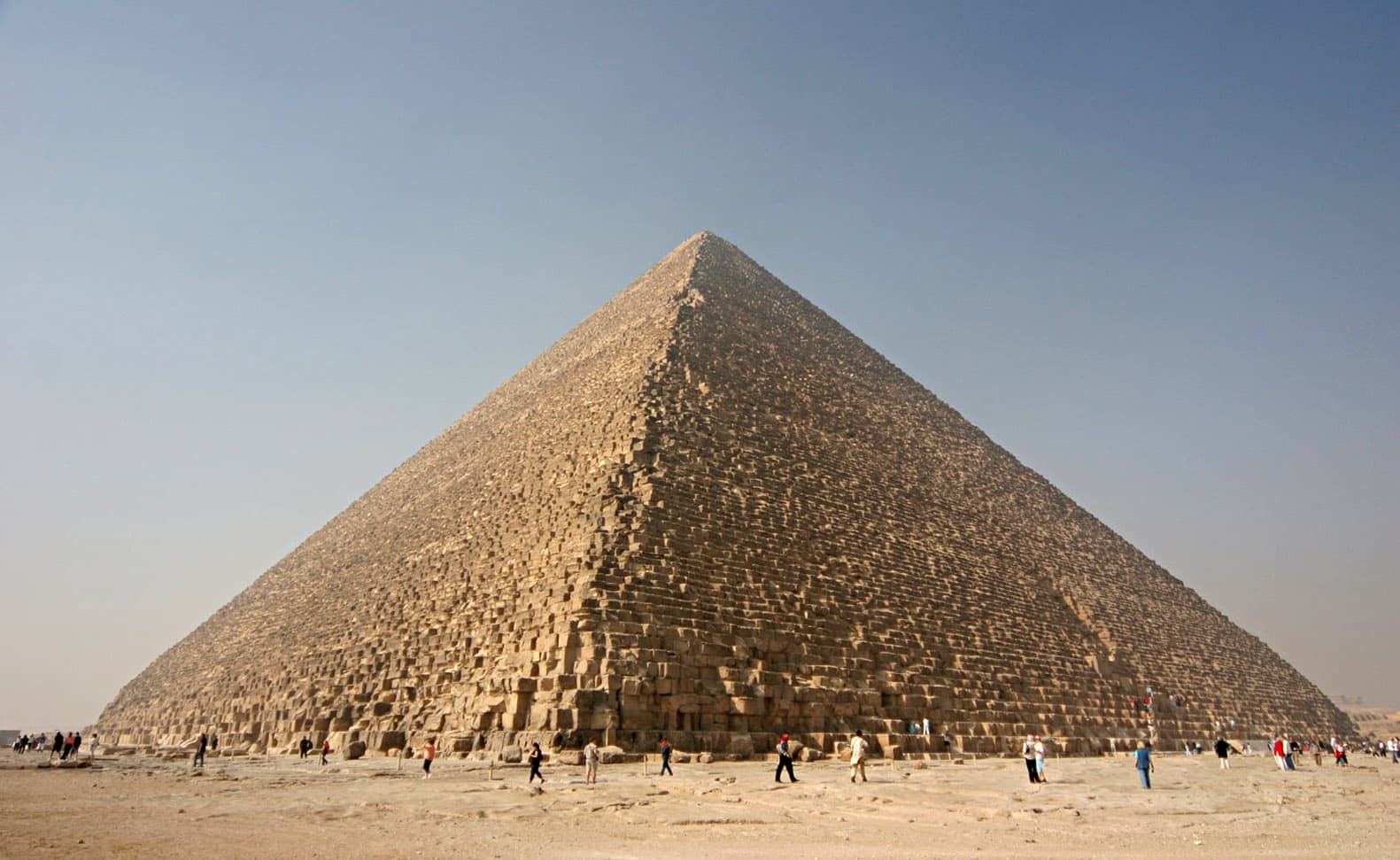
Figure 4. Khufu’s Great Pyramid at Giza today. The fine limestone carried by Merer was intended for the casing. This photograph shows the present exterior; it is not a reconstruction of ancient transport or construction work.
Nina Aldin Thune · CC BY-SA 3.0 · Original and source
At the building sites of Khufu's successors, feeding the hands that moved the stone mattered as much as moving it. Heit el-Ghurab, south of the Giza pyramid complex, draws our attention to this second workplace, hidden in the shadow of the great blocks. Grain stores, bakeries, hearths, and accommodation revealed among mudbrick walls bring back into view the people who had to eat and live below the rising pyramids. This was a logistical center supporting construction particularly under Khafre and Menkaure.8
A mason chiseling a huge block needed food; so did a sailor pulling a heavy oar. Grain also had to reach the people baking bread for them before the day's work could continue. Placing one loaf in one person's hand seems simple. Feeding a large workforce throughout a long construction project was another matter: it meant looking beyond the grain issued from the storehouse today to the next supplies that had not yet arrived. If a gap opened between the remaining stock and the arrival of the next boat, the hands waiting for bread would stop before the hands working the stone. Here was a calculation invisible to anyone looking only at the pyramid's height. Counting and dividing grain sustained the day; reckoning what remained bought the time needed to reach the next delivery. In a place like this, arithmetic could not remain confined to a ledger.
Yet even this powerful system of central control could not endure forever. As Old Kingdom authority weakened, local lords struggled independently for survival and power, and the once-united lands broke apart. Poor harvests and changes in climate deepened the turmoil.9
It was Mentuhotep II, rising from Thebes in the south, who brought the divided territory together again. This was the reunification of the Middle Kingdom that we encountered in Part 6 alongside the upheavals of Mesopotamia's Third Dynasty of Ur. By then, the great pyramids on the Giza plateau already belonged to a past hundreds of years old.
Egypt entered a new phase, the Middle Kingdom. And somewhere within that kingdom, the priest Heqanakht was taking up his pen in the face of an inadequate harvest.
4. A Different Ration Beside Each Name
Heqanakht's second letter contains a list of named individuals.
Members of the household appear one by one, with the amount of grain each could receive for a month written beside the name. And those amounts had been sharply reduced. Heqanakht, the head of the household, had imposed cuts to his family's rations.10
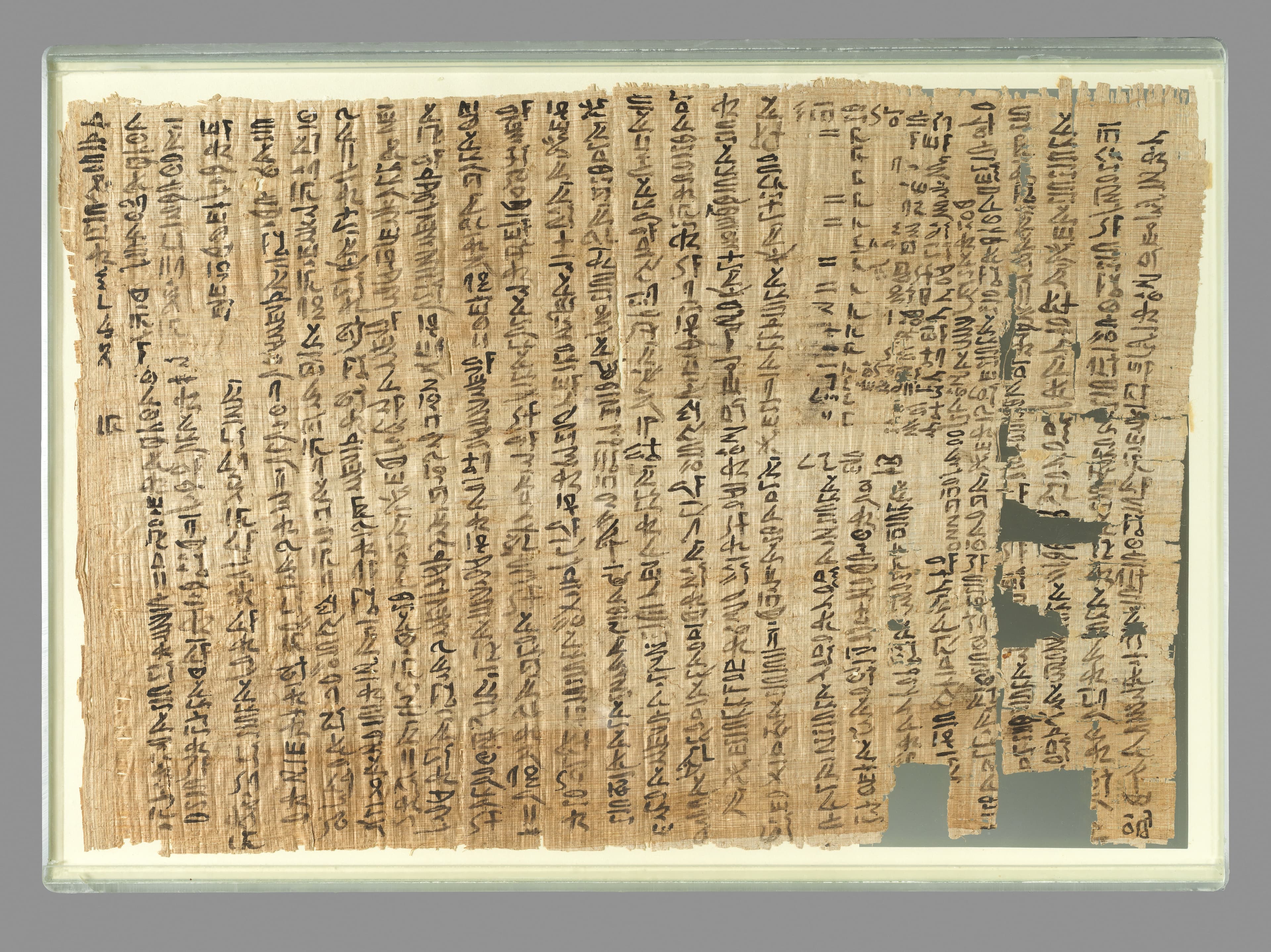
Figure 5. Heqanakht’s second letter, ca. 1961–1917 BCE, Metropolitan Museum of Art 22.3.517. The document contains both a list of household allocations and instructions concerning the treatment of his wife.
The Metropolitan Museum of Art · CC0 · Original and source
The family left behind seems to have voiced considerable resentment and complaint. Heqanakht's answer was chilling. He rebuked them to the effect that, even as the whole land was falling to hunger, they themselves had not yet gone hungry.11
A smaller harvest does not mean fewer mouths to feed. Nor does the pain waiting in their stomachs tomorrow morning diminish by itself. Whose share of the reduced supply should be cut, and by how much? The moment a name was entered on the list with a ration beside it, the suffering caused by a poor flood was distributed into unequal burdens of survival. The crop failure had struck the entire household; the share each person had to bear was far from equal.
The letter held more than dry calculations of grain. Hearing that members of the household were mistreating and harassing his wife, Heqanakht was furious. He sternly demanded an immediate end to their insolence. Cold orders cutting rations and a husband's fierce defense of his wife lay on the same sheet of papyrus. An unemotional allocation of numbers, human anger, and family conflict were inseparable parts of the same reality.
The absent head of the household could not see what was happening at home. He could send written orders, but he could not control the bitterness of those receiving too little grain. Making the totals balance and persuading everyone to accept a harsh distribution were altogether different problems.
Even so, Heqanakht did not merely shrink before the crisis. As he squeezed expenditure, he also searched for new openings. He sought more land to lease where the water might reach and insisted on collecting grain debts owed by others. Within a single letter, he was struggling to survive the present shortage while pressing ahead with plans for next year's farming.12
For him, the area of a field was no mere geometrical value. Knowing its extent made it possible to work out how much seed would be needed, estimate the labor required, and anticipate the grain left in storage after paying rent. But a perfectly calculated area would not, by itself, bring water into the furrows. Before a neatly recorded expected yield became actual barley in a storehouse, it had to pass through hard human labor and a vast, uncontrollable variable: the Nile flood.
To reckon with that uncertain interval, Egyptians placed precise markings on the passage of time as well as on the land.
5. Three Seasons and 365 Days
The later Middle Kingdom, in Lahun, the gateway town to the great Faiyum oasis. It stood beside the pyramid of Senusret II.13
A scribe in an office writes a date at the head of an administrative report: “Year 1, third month of summer, day 20.” Beneath it, records of officials' journeys and items counted in the fields follow in order. When an official elsewhere received the document, the same calendar allowed him to place what had happened beside the river on that particular day.14
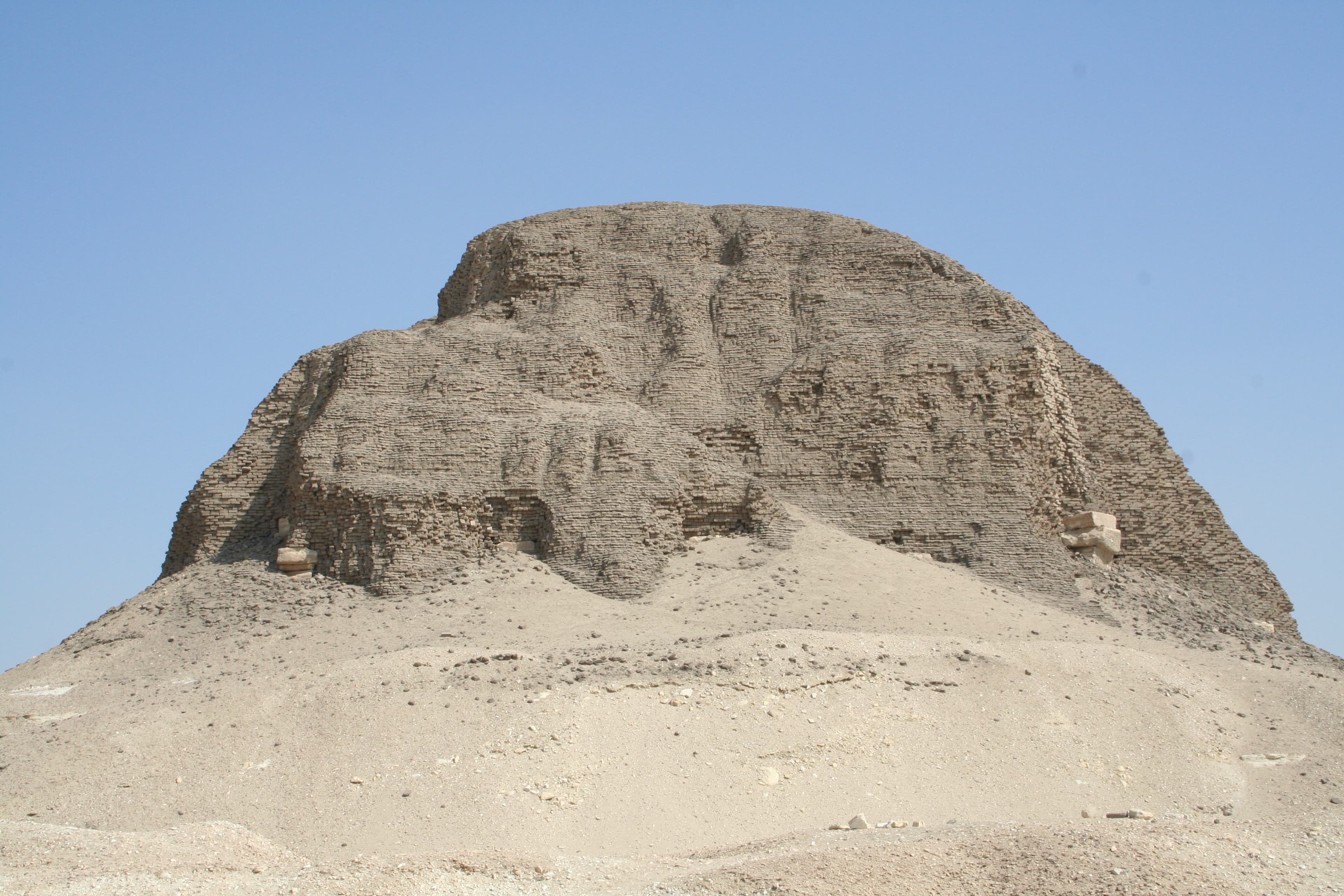
Figure 6. The remains of Senusret II’s pyramid at Lahun. This Twelfth Dynasty monument provides a view of the setting in which the Lahun documents survived. It is not a photograph of the administrative papyrus discussed in the text.
Einsamer Schütze · CC BY-SA 3.0 · Original and source
The ancient Egyptian year revolved around three seasons shaped by the river. Akhet was the inundation, when rising water covered the land; Peret was the sowing season, when the water withdrew and shoots emerged from fertile soil; Shemu was the harvest, when crops were gathered under a burning sun. Flooding, sowing, harvesting. Each season comprised exactly four months, and every month had thirty days. Twelve months made 360 days; five more were added at the year's end.15
Exactly 365 days.
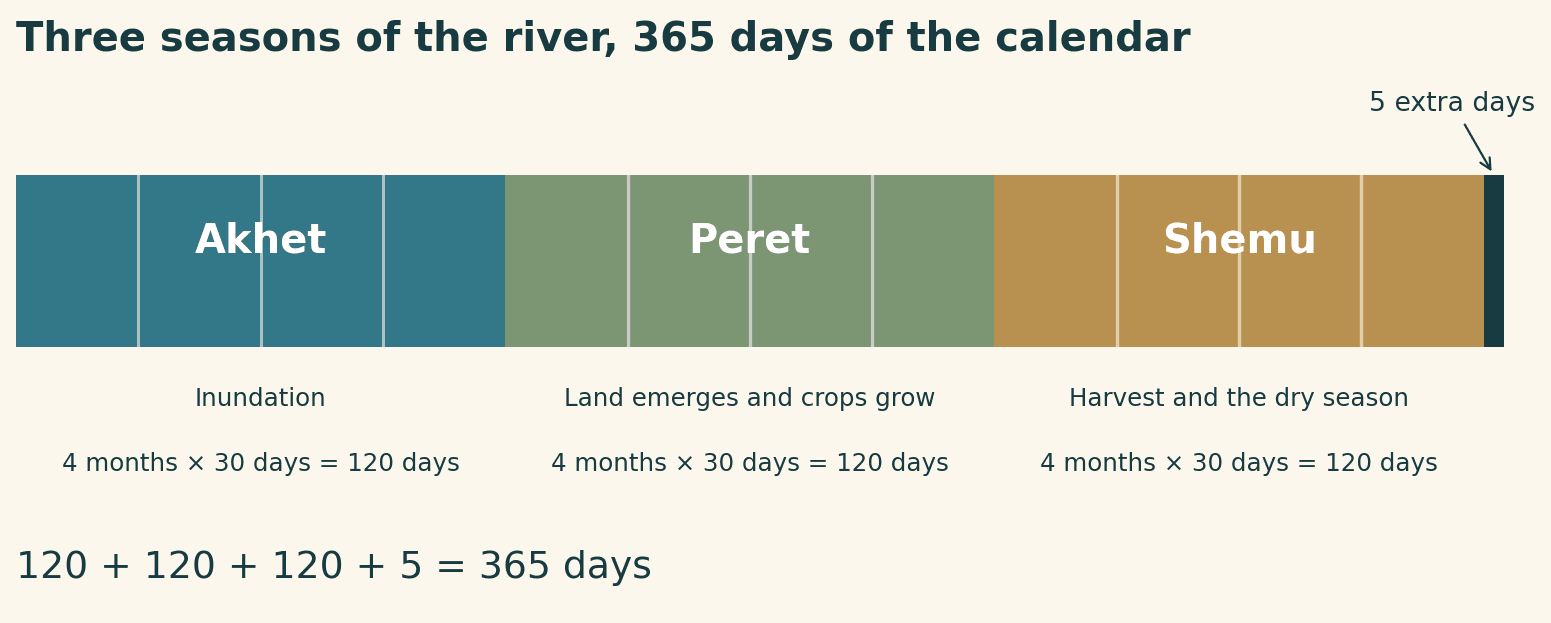
Figure 7. The structure of the Egyptian civil calendar: 120 days for each of three seasons, followed by five additional days. This modern explanatory diagram is based on the text; it does not fix the ancient season names to specific modern months.
Created by EXA · Sources: notes calendar and seked
The river overflowed on unpredictable dates and to unpredictable heights. Yet scribes administering the land along its banks could count time in a fixed sequence of numbers. The day grain was lent and the deadline for its return, the beginning and end of a period of labor—all could be set in order on one shared, objective calendar. Even the frighteningly indefinite time “until the next harvest,” which troubled Heqanakht as he counted his dwindling grain, could be divided in a scribe's hands into a manageable number of months and days.
Yet a small, accumulating discrepancy lay within this orderly calendar. The cycle of sun and seasons requires not just 365 days but roughly another quarter-day—six hours. Egypt's civil calendar had no leap year to correct that fraction. Every four years, its dates therefore slipped one day ahead of the actual seasonal cycle. Over a few years the difference seemed small. After 120 years, the calendar and the seasons were about a month apart.
A date could plainly belong to Akhet, the inundation season, while the fields themselves lay dry and dusty.
The names of the seasons came from a natural rhythm the Nile had established over thousands of years. But the dates of a fixed 365-day calendar gradually drifted away from the actual seasons; independently of that drift, the timing and height of the flood varied from year to year. People needed both an artificial calendar for counting time and a keen eye on the water's actual level each day. A scribe's precise calendar could connect administrative work across great distances. It could not bring nature's great river under control.
Just as recording a field's area did not make the water flow according to those numbers, the inhabitants of the Nile understood painfully well the limits of human measures.
6. A Story a Greek Heard
Every year the Nile flooded and erased the boundaries of the fields. Once the water retreated, farmers had to survey the vanished boundaries again in the mud. Through countless repetitions of that laborious task, geometry was finally born.
It is an enchanting story, still a favorite opening for mathematics textbooks and popular histories. Intuitive, plausible, and easy to remember. Follow this famous origin story back to its roots, however, and we encounter not an Egyptian record but the voice of a Greek outsider.
Herodotus, the “father of history,” traveling in Egypt in the fifth century BCE.
The account he heard from local priests and recorded in his Histories differs noticeably from the romantic version familiar today. A legendary pharaoh named Sesostris had given every subject a square plot of equal size and imposed an annual tax on it. If the river swept away a corner of someone's land, the farmer could appeal to the king. The king sent surveyors to measure the loss, and the tax was reduced to match the smaller holding. At this point Herodotus adds his own view: perhaps geometry arose from this need and later passed to Greece.16
There is no dramatic account here of the river wiping every field boundary clean each year. There is instead a distressed subject's appeal after losing property to floodwater, followed by an administrative survey that verifies the loss and grants tax relief. Even this is not a primary record left by ancient Egyptians themselves. It is an explanation of origins heard and inferred by a foreign traveler some 1,500 years after Heqanakht's lifetime.
What, then, did the Egyptians themselves leave behind? Let us move upstream through time, step by step, from where Herodotus stood.
First, Thebes in the fourteenth century BCE, the capital under the New Kingdom's Eighteenth Dynasty. In the richly painted tomb of the official Menna, men stretch a knotted surveying rope taut across a ripening wheat field. Beside them, scribes carefully record the harvest while workers measure grain and pile it high. Menna oversaw extensive lands belonging to the pharaoh and the temple of Amun. A taut length of rope and a line of numbers on papyrus became the basis for deciding the share of grain to be collected. Here, geometrical surveying accompanied the authority to determine what the crown and temple would take. The person measuring a field held not only the means to record numbers but also the power to claim a share of someone else's harvest.17
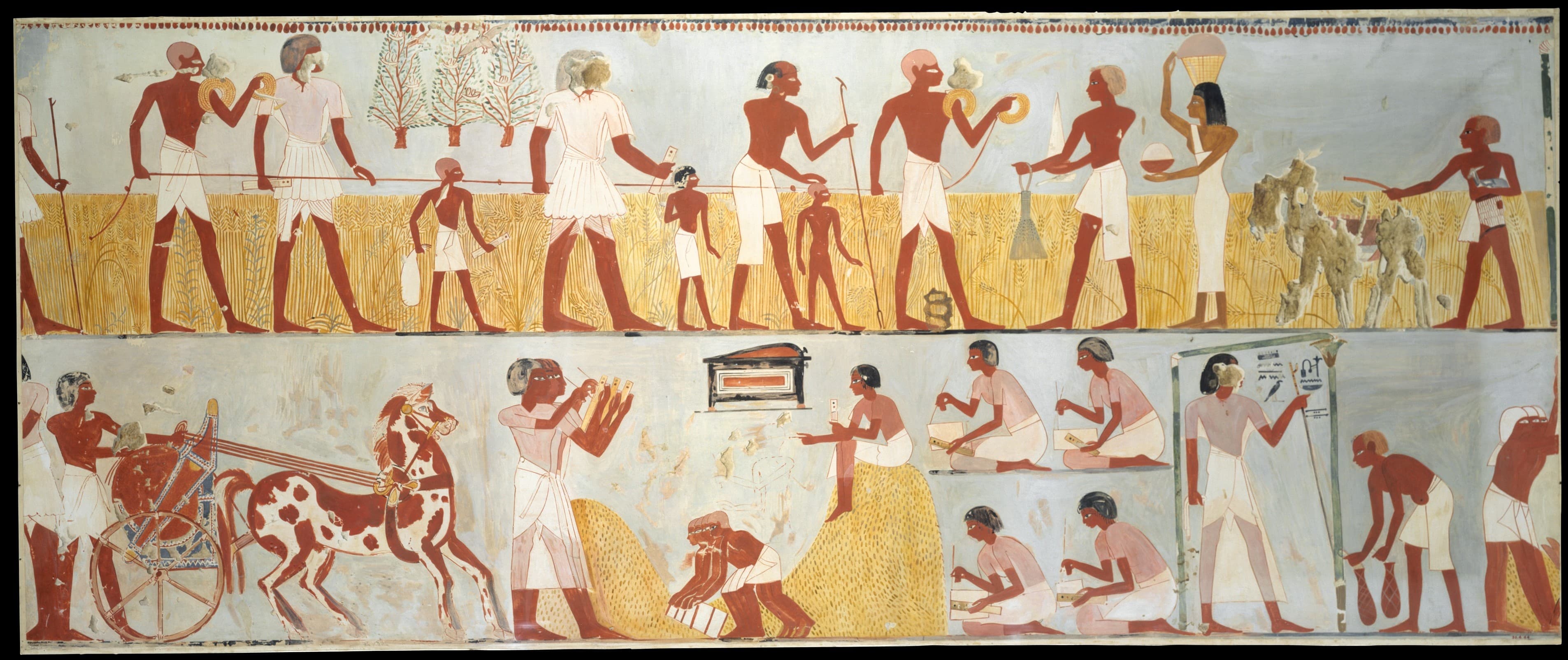
Figure 8. Charles K. Wilkinson’s twentieth-century facsimile of agricultural scenes from the tomb of Menna. The original wall painting dates to the New Kingdom’s Eighteenth Dynasty, ca. 1396–1347 BCE, later than Heqanakht. Field surveying appears above; grain measurement and scribes appear below. This is not a direct photograph of the original wall painting. Metropolitan Museum of Art 30.4.44.
The Metropolitan Museum of Art; Charles K. Wilkinson · CC0 · Original and source
Move back another five hundred years, to Middle Kingdom Lahun. Alongside records of grain receipts and issues, workforces, and land affairs, excavators found fragments of papyrus bearing mathematical problems. There are conversion tables breaking quantities into unit fractions, and closely written procedures working through difficult problems in stages. Accounts from active administrative work and mathematical teaching material for prospective scribes lay side by side within the life of a single town.18
A little deeper in time lie the letters of Heqanakht, agonizing as he cut his family's rations.
In Herodotus's account, surveying served an administration that recognized a farmer's disaster and eased his tax burden. On the walls of Menna's tomb, it was tied to the power to measure and oversee the portion the state and temple would take from farmers. The same knotted rope and the same area calculation could serve as a shield protecting people or as a tool imposing a burden. So could the cold figures in Heqanakht's letters: a language of careful management preparing next year's farming amid a shortage, and at the same time an instrument of control that ruthlessly reduced the household's meals.
7. Meanwhile, to the East
Around 1900 BCE and in the years that followed, thousands of kilometers from the Nile, lay the great Indus city of Harappa.
Its straight streets of fired brick no longer carried the crowds of its flourishing years. When muddy soil from the remains of the declining city was washed through a fine sieve, tiny, easily overlooked grains of charred crops emerged. These small seeds spoke of changes deep within the civilization. Wheat was prominent in the layers from the city's prosperous period. In later layers, as urban vitality waned, barley—able to grow in poorer conditions—again accounted for a larger share.19
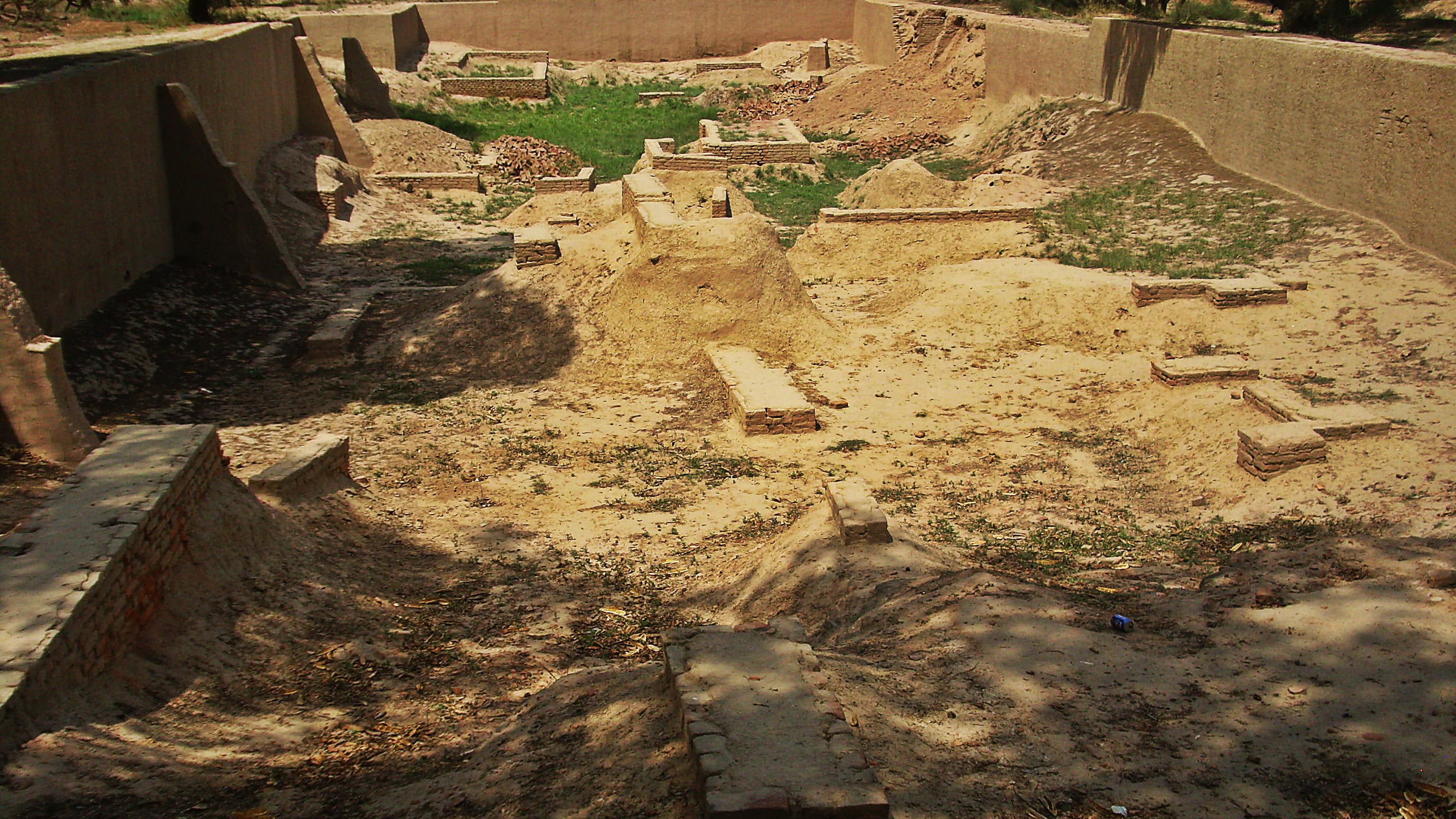
Figure 9. The ruins of Harappa today. This modern photograph shows traces of the city’s brick buildings. The changes in crop composition discussed in the text are based on archaeobotanical evidence; the crops and their changing proportions cannot be read from this photograph itself.
Hassan Nasir · CC BY-SA 3.0 · Original and source
From fields dominated by wheat to fields with a growing share of barley. Turn south to the villages of Gujarat, and another agricultural landscape appears, one in which millets played an important role. The timing and amount of rainfall differed by region; so did the populations that towns and villages had to support. Fields filling the granaries of a city of tens of thousands and fields sustaining a small village through a year of uncertain weather had no reason always to favor the same crops. One path sought a large harvest when the climate was stable; another spread the risk to ward off hunger when the weather turned fickle. Indus farmers were strategically reshaping their crop mix in response to changing soils and rainfall.
In the same broad period when a priest by the Nile pressed a clay seal onto a letter to protect his seed barley, farmers thousands of kilometers east, struggling with a different climate, were urgently choosing what seeds to plant next season. The archaeological traces these civilizations left beside their rivers take very different forms. Yet the chilling weight of the same question bore down on both: the sowing choice I make today may decide whether my family and community survive next year.
8. Under Another King's Name
Year 33 of the Hyksos pharaoh Apophis.
A scribe named Ahmose took up a reed pen and began carefully copying a mathematical document from an earlier age. The monumental scroll is now held by the British Museum and known as the Rhind Mathematical Papyrus. In its preface, Ahmose explicitly stated that this mathematical knowledge had been copied from a document of the Middle Kingdom's Twelfth Dynasty, centuries earlier. The intellectual inheritance of the prosperous dynasty in which Heqanakht had worried over his family's survival was coming to life again under the regnal date of a Hyksos ruler of West Asian origin.20
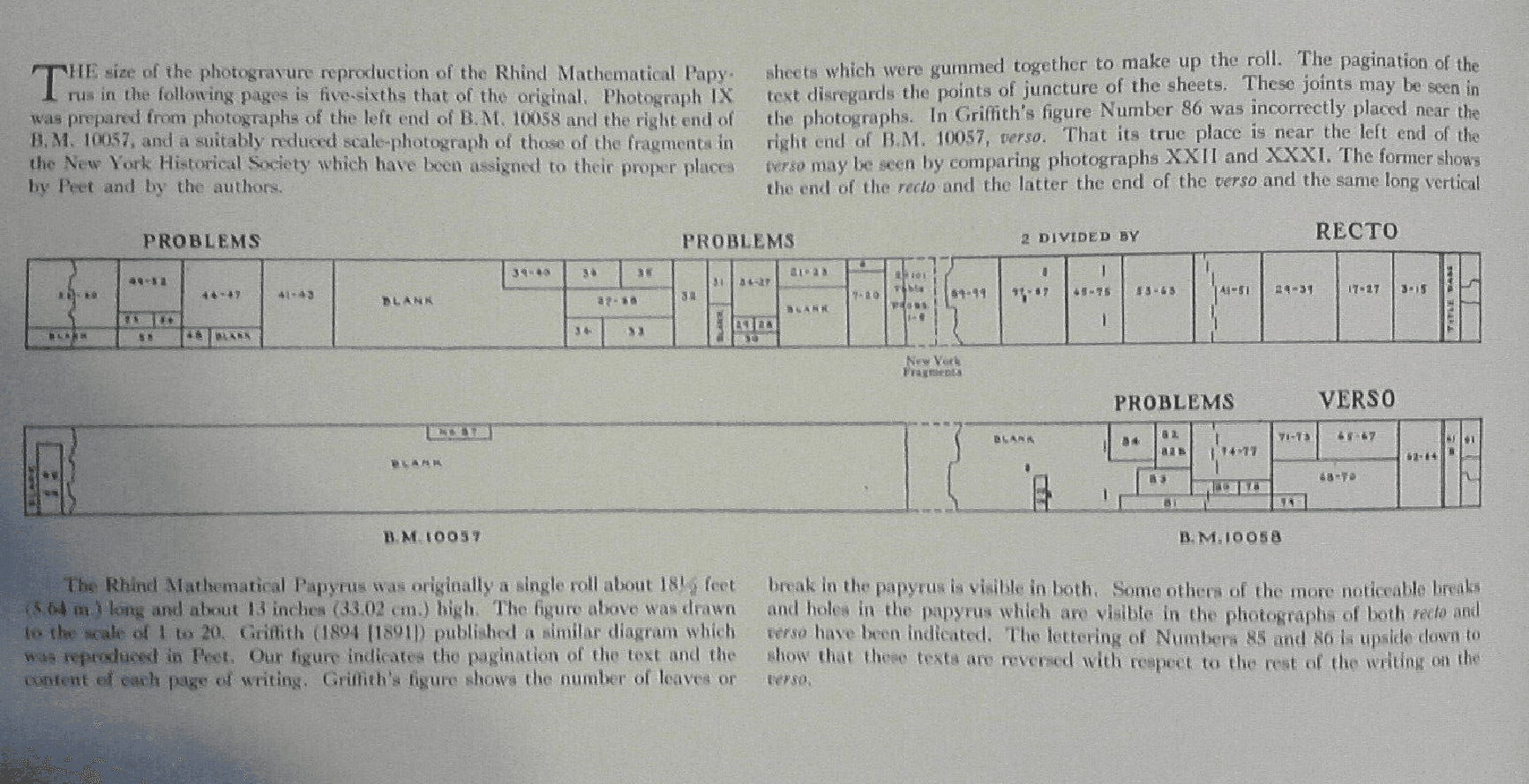
Figure 10. A plate from the Chace edition showing the arrangement of problems on the recto and verso of the Rhind Mathematical Papyrus. MinnesotanUser photographed the published plate; this is not a color photograph of the original papyrus.
MinnesotanUser · CC BY-SA 4.0 · Original and source
In the intervening years, Egypt had fractured again. As Middle Kingdom splendor faded, a new ruling power grew among communities of West Asian origin that had settled in the delta over generations. It established a dynasty based at Avaris. Its rulers are known as the Hyksos, a name derived from an Egyptian expression meaning “rulers of foreign lands.” Meanwhile, native Egyptian kings crouched in the old southern city of Thebes, sharpening their blades. History calls this tense division between north and south the Second Intermediate Period.21
Apophis was a monarch of that Hyksos dynasty. While two hostile powers glared at each other along the Nile, ready to clash at any moment, a scribe painstakingly copied old problems in fraction division, the area of trapezoids, and the volume of cylindrical grain stores.
The pharaoh's family had changed, as had the ancestry of the ruling group. But fields swept by muddy water still had to be measured, and people still needed their shares of grain. The regnal date at the top of the document bore a new dynasty's ruler; the procedures beneath it carried the living work of scribes from a brilliant dynasty centuries past.
The problems Ahmose copied were no leisurely games of an ivory tower. How much barley could a round granary hold? How could a fixed quantity of bread be divided among people in prescribed proportions? How could the area of a slanting field be measured? How could a pyramid be built with a consistent slope? The solutions did not merely set down a mechanical answer. They explained which number to find first, which step to take next, and how to reach the result. A sequence of reasoning was laid out with care. It was a practical teaching text, designed so that later scribes could follow the route and find answers to new problems themselves.22
The problems of dividing bread and grain bring back the question we faced in Heqanakht's ration list. What happens when the quantity to distribute does not divide evenly among the recipients? Amounts smaller than a whole share also need to be recorded if giver and receiver are to reckon the same portion. Egyptian scribes commonly used unit fractions—fractions with a numerator of 1, such as a half or a third—to express such quantities. At the beginning of the Rhind Papyrus is a table dealing with 2 divided by odd numbers. It expresses complicated shares as sums of unit fractions, ready to be used in subsequent calculations. Older fragments of a table from Lahun preserve the same decompositions. Even as dynasties changed, a new scribe could continue from calculations left by a predecessor.23
The British Museum dates this copy to approximately 1550 BCE, less than half a century after the fall of Hammurabi's Babylonian dynasty under the Hittite attack described in Part 7.24 Around the time Babylon's dynasty collapsed beside the Euphrates, older mathematical wisdom was being quietly copied beside the Nile, sustaining its life under a different ruling house.
Egypt's division did not last forever. The young pharaoh Ahmose I rose from Thebes, drove the Hyksos out of the delta, and reunited the two lands. It was the opening of the New Kingdom, as Egypt grew powerful again. By coincidence, this king bore exactly the same name as the scribe who had quietly copied an earlier dynasty's mathematical teaching text.
The history of a conqueror holding a sword is recorded in the rise and fall of dynasties. The history of the practical calculations that sustain the world runs on through the worn pens of scribes, copying old problems amid war and carrying knowledge into another age.
9. A Pyramid Rebuilt on Papyrus
Return to the Rhind Mathematical Papyrus, copied under the regnal date of Apophis, and a pyramid stands in Problem 56.
A great pyramid has a base side 360 cubits long and a height of 250 cubits. What is its slope?25
Nearly a thousand years had passed since the Great Pyramid rose above Giza. Before the scribe lay no enormous limestone block, but abstract numbers neatly written in ink on dry papyrus. The pharaoh's sky-reaching monument was being rebuilt as a geometry problem through which later scribes could learn the principles of calculation.
Yet pyramids were not merely a memory of vanished building practices. Kings of the Twelfth Dynasty, to which this text traced its origins, had also built them. After Senusret II at Lahun, Amenemhat III left his own pyramid at Hawara.26 Height alone does not tell us how steep a face is. Widen the base while keeping the height, and the slope becomes gentler. Comparing the slopes of structures of different sizes required a language that could reckon both vertical height and horizontal retreat.
Today we often express slope as an angle measured in degrees. Ancient Egyptian scribes asked the question quite differently.
“For every cubit of vertical rise, how many palms must we move horizontally?”
The cubit originated as the distance from elbow to fingertip. The royal cubit used in this problem was divided into seven palms, a unit based on the breadth of a hand. Egyptians called the horizontal distance in palms for a vertical rise of one cubit the seked.
With a base side of 360 cubits, the horizontal distance from the center of the base to the foot of a face is exactly half that: 180 cubits. Across those 180 cubits of horizontal distance, the pyramid reaches a vertical height of 250 cubits at its apex. Drawn with modern geometry, the calculation amounts to reducing this cross-section to a similar triangle one cubit high, then expressing its base in palms. In modern algebraic notation:
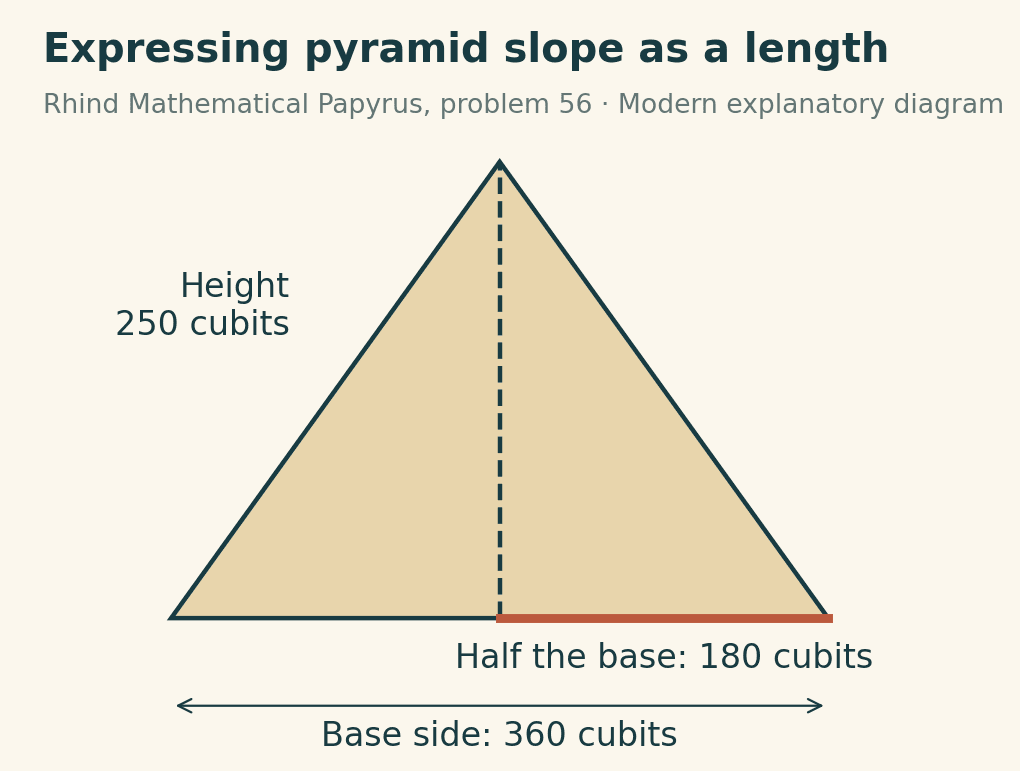
Figure 11. A modern explanatory diagram of the dimensions in Rhind Problem 56. The section passes through the apex, the center of the base, and the midpoints of two opposite sides. The 360-cubit and 250-cubit dimensions are given in the problem, not measured from Khufu’s Great Pyramid. One cubit equals seven palms.
Created by EXA · Sources: notes calendar and seked
Five and one twenty-fifth palms.
The imposing slope of a mountain of stone had become a clear numerical proportion that a craftsperson could measure and check with the breadth of a hand.
Of course, no such neat modern equation appeared on the ancient papyrus. It set out successive instructions: halve a given number, multiply a ratio, convert the units. But once a scribe understood the order of the solution, the same method could be used for a new pyramid problem with a different base and height. Beyond memorizing the dimensions of one building lay a framework of calculation that could also be applied to an unfamiliar structure. This was the intellectual step the ancient teaching text sought to pass on to future officials.
In Part 7, a Babylonian scribe beside the Euphrates obtained a remarkably close approximation to the length of a square's diagonal. Beside the Nile, another scribe handled the slope of a great stone pyramid in units based on the width of a hand. The mathematicians of these civilizations were not rivals ranked on a single ladder of progress. On different riverbanks, in different places of work and survival, they forged their own tools of calculation to address the tasks before them.
Heqanakht's letter cutting family rations and Ahmose's mathematical text training aspiring scribes seem, at first, utterly different kinds of writing. One is an urgent order from a household head disciplining dependents during a crop failure; the other is a manual of numbers and shapes for the next generation of officials. Set the two papyri beside one another, however, and we can see the different spans of time held within the act of recording numbers. One account reckons the grain to divide today. One teaching text prepares for the problems another generation will encounter. Calculations that sustained immediate life and knowledge that would endure found a place together in scribes' hands.
Here, where we encounter fractions in the hands dividing grain and proportion on the face of a pyramid, we can return to the purpose stated in the series preface.
EXA's Scientific History weaves the histories of mathematics, science, engineering, IT, economics, and management into the long course of world history. Its purpose is to understand the times and people among whom bodies of knowledge—now taught as separate disciplines—took shape, influenced one another, and helped create the world we inhabit.
Just as a ship needs a harbor to reach land, unfamiliar knowledge needs a context in which our understanding can receive it. In this series, that harbor is world history. Following people's lives and choices, we encounter the problems behind formulas, the attempts and failures behind technologies, and the conflicting interests behind institutions. Knowledge connected in this way becomes more than something to memorize. It becomes our own means of reading today's world and forming judgments. This is also why EXA pursues this long journey: to understand the technologies, organizations, markets, and human behavior that constitute business, beginning with the history of the civilizations beneath them.
Including mathematics in the main narrative and exploring it further in a separate companion article is one step toward that purpose. The main article follows the course of world history to the places where an age's problems met its knowledge. The companion follows the principles and procedures of calculation more deeply. Together they seek to explain both why an age asked a question and why its answer works. The science, engineering, and management we encounter later will likewise be read alongside people's lives within this long history.
We are now passing through an early landscape where world history and the history of mathematics meet.
Epilogue. The Distance Between Numbers and Life
One. Even Exact Calculation Leaves a Decision to Be Made
As calculation becomes more precise, people are tempted to hide even the weight of moral judgment and responsibility behind numbers. Yet knowing the remaining grain down to the last kernel cannot make a ledger decide whose ration should be cut first.
Resolving to preserve the seed for next year's sowing was a harsh choice, imposing hunger on the family facing tonight's meal. How much of that painful burden to place on whose shoulders remained an inescapable decision—and responsibility—for the person holding the calculating tool. This is why a list of reduced rations and a husband's anguished anger over his wife's treatment coexist on the same sheet of Heqanakht's papyrus.
Two. One Calendar Does Not Mean One Water Level
Standards established through long custom and agreement have immense civilizing power: they connect the economic activities of people far apart. Yet the stronger a standardized system becomes, the harder it can be to notice the dangerous moment when its measures begin to diverge subtly from reality.
Egypt's 365-day calendar drifted one day from the actual seasonal cycle every four years. Even on a date named for inundation, dust might blow across dry fields. The insight needed to follow the familiar order of human institutions while continually questioning and watching the changes beyond them was not a challenge for Nile scribes alone. It remains a task for everyone living within the artificial walls of modern systems.
Three. Knowledge Continues Through the Hands That Use It Again
Merer, the quarry overseer, recorded the arduous daily journeys of barges carrying limestone. Heqanakht, the priest, listed those who would receive grain on the brink of a struggle for survival. Ahmose, the scribe, carefully copied mathematical solutions inherited from a fallen dynasty. Their practical reasons for writing differed greatly. Yet each took up a pen in the hope that someone not standing before him would read, judge correctly, and act.
A political power's long command of the historical stage and a civilization's knowledge passing across generations are very different things. The preface to the Rhind Mathematical Papyrus makes that distinction vividly clear. The ruler in the year of copying was Apophis of the Hyksos dynasty; the knowledge restored to the papyrus belonged to scribes of a much earlier dynasty.
Knowledge survived into another age not only through the names of rulers who carved their own names into stone in search of immortality, but through the worn hands of unnamed people who opened it, used it, and used it again to solve real problems.
Heqanakht's letters never reached the family he loved and worried about. Stored in an empty neighboring tomb, they were trapped in darkness when a burial took place soon afterward and the tomb was sealed. For four thousand years, no one broke their clay seals.
In 1944, the British crime writer Agatha Christie drew powerful inspiration from this ancient priest's letters and published Death Comes as the End, a mystery set in ancient Egypt. A stern priest's household on the west bank of the Nile; family members maneuvering over limited land and shares; a patriarch sending sharp reprimands and instructions from afar. The troubled voice that never reached its intended Egyptian family finally crossed four thousand years to touch readers around the world.27
Today, the papyrus letters lie quietly displayed behind glass at New York's Metropolitan Museum of Art. They are small records that someone's hands once folded neatly, tied with string, and sealed with rough clay. Across their faded surfaces, clear traces of ink still carry one person's urgent plea: endure today's hunger and protect the barley seed, so that life can return next season.
It is the living breath of a person waiting desperately for the river of life to swell once more, far to the south in the Ethiopian highlands.
Next — Following the Egyptian Calculations
In the next mathematics companion, we will work through calculations left by the scribes of the Nile. Beginning with the use of unit fractions to express shares of bread and grain, we will explore how they reckoned field areas and pyramid slopes. We will also calculate why the 365-day calendar, with its three seasons, gradually moved out of step with the actual seasons. Setting the recorded procedures beside modern explanations, we will examine the methods they learned and passed to those who followed.
Notes and Sources
Footnotes
The Metropolitan Museum of Art, Heqanakht Letter I, 22.3.516, object description and audio commentary. The museum describes the 1921–22 excavation season, the tomb of Meseh, the folds, strings, and seals on some letters, and their storage in an unused neighboring tomb, which was sealed when a burial took place before the letters could be sent. ↩
The Metropolitan Museum of Art, Heqanakht Letter I, 22.3.516. Classified as Twelfth Dynasty, reign of Senusret I, ca. 1961–1917 BCE; some place the letters in the late Eleventh Dynasty. The low flood, inadequate harvest, and allocation of resources until the next harvest follow the museum’s audio commentary on this object page. No precise date or location of writing is established. The contrast between different uses of grain is a reconstruction grounded in the document’s circumstances. ↩
Met, Ancient Egypt Transformed: The Middle Kingdom, Annotated Checklist, exhibition entry 94, quoting James P. Allen’s translation (original edition: The Heqanakht Papyri, 2002, p.15). The Korean source translated “Mind you that my barley seed is guarded”; this English version restores that wording. ↩
Egyptian Ministry of Tourism and Antiquities, Narmer Palette, ca. 3100 BCE. The two crowns, smiting scene, and procession. The artifact is not treated as a record proving that a single battle completed unification. Nor does the text adopt a determinism in which a regular river automatically produced a unified state. ↩
Dorothea Arnold, An Egyptian Bestiary, The Metropolitan Museum of Art Bulletin 52(4), 1995, “The Alluvial Land.” The upstream rainfall feeding the flood, and the dangers of floods that were too low or too high. The discussion concerns the river regime before modern dam construction. ↩
Pierre Tallet, Les papyrus de la mer Rouge I: Le « journal de Merer », 2017, public extract and English appendix, Papyrus B, section BI. Stone transport from Tura, mooring at She-Khufu, and journeys to Akhet-Khufu. The IFAO publication notice also identifies the late reign of Khufu and waterborne transport duties. The text does not establish the size of the crew, quantities transported, or methods of lifting stone. ↩
Pierre Tallet, Extract from the excavator’s report, p.2. The 2013 excavation season and documents from the end of Khufu’s reign. Akhet-Khufu (“Khufu’s Horizon”) is the name of the Great Pyramid. ↩
Ancient Egypt Research Associates, The Lost City of the Pyramids. Facilities at Heit el-Ghurab and their role supporting Fourth Dynasty construction. The institutional account focuses on Khafre and Menkaure; its relationship to Khufu’s reign remains under separate investigation. The food-supply paragraph is a reconstruction based on the functions of the facilities, not a claim about the workers’ status or a single common ration system. ↩
Met, The Art of Ancient Egypt: A Resource for Educators, historical overview; Adela Oppenheim, Egypt in the Middle Kingdom. Fragmentation after the Old Kingdom and reunification under Mentuhotep II. Crop failure and climate change are not treated as the sole causes of fragmentation. No single year of reunification is fixed, since the sources differ. ↩
Met, Heqanakht Letter II, 22.3.517. A list of allocations to members of the household and instructions to correct the mistreatment of his wife. The context of ration reductions is read alongside the audio commentary for Letter I. Unverified quantities are not included in the main text. ↩
Letter II, James P. Allen, The Heqanakht Papyri, 2002. A passage to the effect that the whole land was dead, yet the household had not gone hungry. The main text paraphrases the sense rather than quoting directly. ↩
Met, audio commentary for Letter I, discussing Letters I–III. For the relationship between household affairs and management of land supporting funerary rites, see UCL, Accounting for domestic activities. Heqanakht’s activities are not equated with running a modern private business. ↩
UCL, Lahun in the Middle Kingdom. The pyramid complex of Senusret II of the Twelfth Dynasty and remains of the late Middle Kingdom town. ↩
UCL Digital Egypt, Lahun UC 32102A — translation. The text begins “Year 1 month 3 of summer day 20.” The regnal year is not converted into an absolute date under a specific king. The Lahun corpus includes material from the later Twelfth through early Thirteenth Dynasties. ↩
UCL, The Egyptian–Coptic calendar; Cynthia J. Huffman, An Ancient Egyptian Mathematical Photo Album: Calendars. Three seasons, four months each, thirty days per month, plus five days. The difference between 365 and approximately 365¼ days produces a drift of one day in four years and thirty days in 120 years. Season names are not fixed to specific modern months, nor is the later Coptic leap-day system projected back into the Middle Kingdom. The relationship between Sirius observations and the calendar’s origins is not addressed. ↩
Herodotus, Histories 2.109, translated by G. C. Macaulay. Equal land allotments; a report by a person who had lost land to the river; tax relief following a survey; and the author’s inference that geometry arose from this practice and passed to Greece. The main text paraphrases the account and does not identify Sesostris directly with a particular Middle Kingdom king. ↩
American Research Center in Egypt, Tomb of Menna (TT69) in the Theban Necropolis, Melinda Hartwig’s research and conservation project. Dating around the reign of Amenhotep III in the Eighteenth Dynasty, land-supervision titles, and agricultural and surveying scenes. The evidence is later than the Middle Kingdom. ↩
UCL, The Lahun Papyri; Annette Imhausen, Mathematical Fragments from Lahun: Introduction. Administrative records, mathematical tables, and problem texts. Finds from the same town are not assumed to form the library of one scribe or one school. ↩
Jennifer Bates and Jungwoo Choi, “Different strategies in Indus agriculture: the goals and outcomes of farming choices,” Antiquity 97, 2023, pp.1488–1500, especially pp.1493–1496. Changes in Harappa’s crop composition, regional patterns in Gujarat, and interpretations of the tension between demand and farming choices. The Late Harappan comparison covers approximately 1900–1700 BCE and is not presented as an event in the same year as Heqanakht’s letters. Crop evidence alone is not used to explain the civilization’s entire decline. ↩
Provided by the British Museum, Rhind Mathematical Papyrus. Year 33 of Apophis, copied from a Twelfth Dynasty document, Second Intermediate Period. Museum numbers EA10057–58. “Rhind Papyrus” is a modern name. ↩
Egyptian Ministry of Tourism and Antiquities, Second Intermediate Period; UCL, Egypt in the Second Intermediate Period. Migration and settlement, the Hyksos dynasty at Avaris, the Theban rulers, and reunification under Ahmose I. The Hyksos rise to power is not treated as a single external invasion; disagreements over periodization and dates remain acknowledged. ↩
Annette Imhausen, UCL, Problem Texts. The structure of problem texts: subject, given quantities, calculation instructions, and intermediate results. This format is not turned into a claim that Egyptians did not understand logic or proof. ↩
UCL, Lahun mathematical table UC 32159. The decompositions for odd numbers 3–21 in the Lahun table match those in the Rhind table. The surviving Rhind table covers odd numbers 3–101. Unit fractions were a widely used notation; this does not deny special notations such as that for 2/3. The connection to rations explains the practical context of the problems, rather than proving when fractions were first invented. ↩
British Museum, Hieroglyphs: Unlocking Ancient Egypt, large print guide, 2022, “Textbook maths”, ca. 1550 BCE. Older histories of mathematics also use ca. 1650 BCE. “Less than half a century” juxtaposes the museum’s approximate 1550 date with the Middle Chronology date of 1595 BCE used in Part 7; it does not independently establish an absolute chronology or a causal link between the events. The secure documentary reference is Year 33 of Apophis. ↩
Arnold Buffum Chace et al., The Rhind Mathematical Papyrus, Vol. I, 1927, Problem 56, printed pp.96–97 (PDF pp.112–113). Base side 360 cubits; height 250 cubits; one cubit equals seven palms; result 5 + 1/25 palms. Modern symbols are explanatory restatements. Concepts of angles or trigonometric functions are not projected back onto ancient scribes. ↩
Egyptian Museum Cairo, Pyramidion of the pyramid of Amenemhat III. Amenemhat III’s Twelfth Dynasty pyramid at Hawara and construction at Dahshur. Rhind Problem 56 is not claimed to have been used directly at a specific building site. ↩
Agatha Christie official website, Death Comes as the End. Published in 1944 and inspired by the Heqanakht family letters. The novel’s events are fictional, not historical facts. The Korean title was a provisional translation in the draft, accompanied by the English title. ↩
Join the discussion