

1. The Question Mark
Monday, 4 p.m. The factory warehouse.
The plant manager deliberately turned into that aisle. Last week, he had walked past it on his way down the stairs.
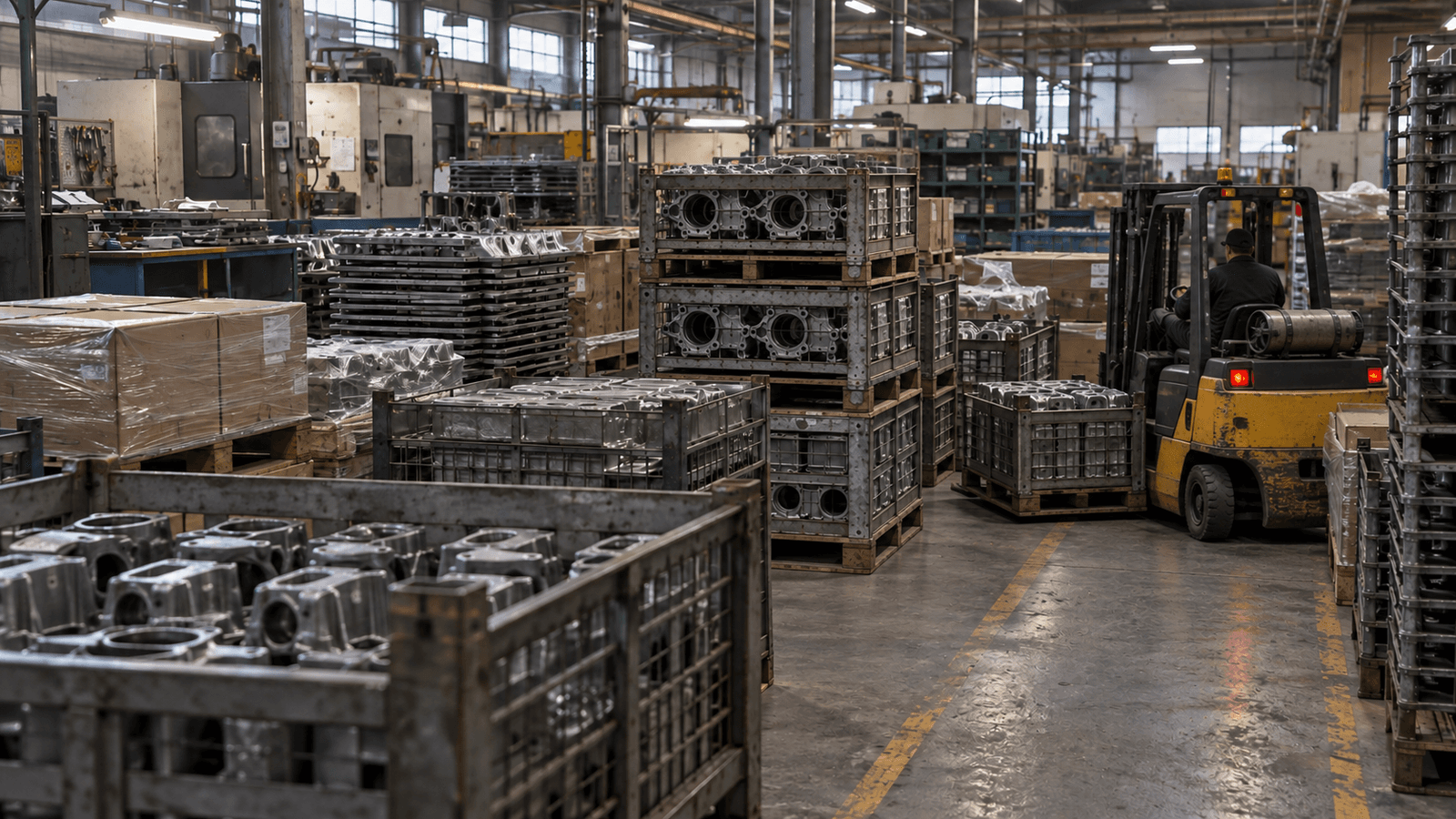
The pallets were still there. They still filled the innermost sections, and the forklift still had to reverse two or three times to turn, just as it had last week. Only one thing had changed: he had stopped walking.
He took out his phone and reopened last month's inventory report. He had looked at that screen several times over the past week. Finished goods inventory was nearly twice what it had been three months earlier.
They were goods that would sell eventually. He still believed that. Until last week, however, nothing had followed that sentence. This week, a question followed it. The question mark the professor had left on the classroom board.
The line beneath 'net profit on the books.' And the question mark.
The forklift reversed again. The plant manager put his phone in his pocket and returned to his office. Tomorrow would be the seventh class.
2. Last Week's Calculations
Tuesday, 2 p.m. The large lecture hall in the main building of the graduate business school.
Almost everyone was sitting where they had sat last week. The plant manager in the front row; the sales executive and the owner of a small business in the middle rows, with the cost accountant, production manager, and finance manager beside them. Graduate students opened their laptops in the back rows, and fellow professors sat in the very last row.
The professor drew another question mark at the upper right of the board.
"Last week, we stopped at this question mark. The business owner asked: The two companies sold the same quantity and received the same amount of money, yet B's net profit is 900 higher. Where did that 900 come from?"
The business owner nodded.
"That is where we will begin today. Let us first revisit the case on which the calculations are based."
Last week's table appeared on the screen.
| A | B | Difference | |
|---|---|---|---|
| Production volume | 100 | 1,000 | 900 |
| Sales volume | 100 | 100 | Same |
| Selling price per unit | 50 | 50 | Same |
| Sales revenue | 5,000 | 5,000 | Same |
| Direct materials per unit | 12 | 12 | Same |
| Variable overhead per unit | 8 | 8 | Same |
| Total variable cost per unit | 20 | 20 | Same |
| Total fixed manufacturing costs | 1,000 | 1,000 | Same |
| Total fixed selling costs | 500 | 500 | Same |
| Total fixed costs | 1,500 | 1,500 | Same |
(Monetary units are omitted. The figures cover the same period, and neither company has any beginning finished goods inventory. All sales proceeds have been received, and all costs have been paid in cash. Assume there is no revenue or expense other than the items shown in the table.)
"These are two companies in the same group. Every other condition is identical; only production volume differs. Company A made 100 units and sold 100. Company B made 1,000 units and sold 100. Last week, we used these figures to calculate net profit under financial accounting standards. Could our cost accountant walk us through the steps once more?"
The cost accountant opened his notebook at his seat.
"We divided the fixed manufacturing costs of 1,000 by the number of units actually produced and allocated them to the products. For A, dividing by 100 gives 10 per unit; for B, dividing by 1,000 gives 1 per unit. Add materials of 12 and variable overhead of 8, and the cost of one unit is 30 for A and 21 for B."
"The cost of the 100 units sold is the cost of goods sold: 3,000 for A and 2,100 for B. Subtract that from sales revenue of 5,000, and gross profit is 2,000 and 2,900. Subtract fixed selling costs of 500, and net profit is 1,500 and 2,400. B's remaining 900 units are inventory valued at 21 each, giving 18,900."
"And that difference of 900," the cost accountant added, "is the fixed manufacturing cost allocated at 1 per unit to the 900 units in B's inventory. It remains in the warehouse instead of being recognized as an expense of this period."
"Exactly," said the professor. "Last week, the business owner took the question one step further. We know where it was recorded—but does that mean the company earned 900 more?"
The professor advanced the slide. A sentence appeared.
Compare the accounting profit in this case using three costing methods: ① absorption costing (current financial accounting), ② variable costing, and ③ super-variable costing (throughput accounting). Both ② and ③ are methods covered in management accounting textbooks.
"Last week's calculation was the first of these. These are the figures your companies report externally whenever they close their books. Today, we will calculate the same facts using the other two methods. Both appear in management accounting textbooks.
"If we divide management accounting into three areas—product costing, performance evaluation, and responsibility accounting—the second method, variable costing, is a core theory in performance evaluation. It is the method used to calculate the break-even point. Break-even point (BEP) analysis is a methodology for performance evaluation in management accounting.
"The third method, super-variable costing, includes only direct variable costs, such as materials, in product cost. Dr. Goldratt developed it on the basis of the Theory of Constraints. It began as an effort to narrow the gap between practice on the shop floor and accounting for strategic decision-making. After demonstrating results in practice over several decades, it became an established part of management accounting textbooks.
"Alongside cash flow, throughput accounting is also one of the main subjects we will explore in depth in this course. In practice, the name is also rendered as 'cash-generating accounting.' Today, we will call the third method 'throughput accounting.'"
The professor drew three columns on the board. Financial accounting. Variable costing. Throughput accounting. He drew a bracket over the last two and wrote 'Management accounting.'
"We will not complete every calculation for one method before moving to the next. We will compare, line by line, how the three methods treat the same item. The aim is to see exactly where the numbers diverge."
3. The Cost of One Unit
An empty table appeared on the screen. Items were listed down the left, with the three methods and A and B across the top.
"The first line is direct variable cost per unit. In this case, that means materials."
"It is 12 under all three methods," the production manager said first. "You cannot make the product without materials."
"Correct. Materials go into product cost under every method. The next line is variable overhead per unit."
The professor filled in the cells. Financial accounting: 8 and 8. Variable costing: 8 and 8. Then he wrote 0 in both throughput accounting cells.
The cost accountant immediately raised his hand.
"Zero? They used electricity and consumables. Why is it zero?"
"A good question. This zero does not mean the money was not spent. It means throughput accounting does not include variable overhead in product cost. A few lines down, we will see where that 8 goes. For now, just remember that the cost has not disappeared. It is treated somewhere other than product cost."
The cost accountant wrote 0 in his notebook and drew an arrow beside it.
"Adding these two lines gives the subtotal of variable costs included in product cost."
= Direct variable cost per unit + Variable overhead per unit included in product cost
"Next are fixed costs—the very item that made net profit differ in last week's calculation." The professor looked toward the last row. "Management accounting is your specialty, Professor. May I ask you to take this line?"
The fellow professor stood. He had long worked in management accounting, moving between the lecture hall and industry. Last week, he had chosen B with the qualification, 'if we evaluate them by net profit.'
"Financial accounting works as we saw last week. We divide the fixed manufacturing costs of 1,000 by production volume and allocate them to the products: 10 for A, 1 for B. Variable costing takes a different approach. It does not allocate fixed manufacturing costs to the products. It treats them as the cost of operating the factory during that period—a period cost—and expenses the full amount in that period. So the fixed cost allocated to one unit is zero for both A and B."
"Why treat it that way?" asked the production manager.
"Because the fixed cost is the same regardless of how many units are made. Whether they make 100 or 1,000 units, it is 1,000. If you divide a cost that does not change with production volume by the number of units produced and allocate it to the products, the cost per unit looks lower as you produce more. Even though the money actually spent is the same." The fellow professor paused. "Last week's question assumed a company that evaluates performance by net profit. Accept that premise, and the answer is B. I raised my hand for B to show you the weight that answer carries in this classroom. Today, we change that premise and do the calculations."
Several people turned back through their notes to find what he had said last week. The qualification had been there from the beginning.
The fellow professor continued. "Throughput accounting—called super-variable costing in management accounting textbooks—does not allocate fixed manufacturing costs to products either. In that respect, it is the same as variable costing."
The professor filled in the cells.
= Fixed manufacturing costs allocated to products ÷ Production volume
"Now we can calculate the cost of one unit. We add the fixed cost allocated per unit to the variable cost subtotal."
= Variable manufacturing cost per unit + Fixed manufacturing cost allocated per unit
The professor displayed the completed table.
| Product cost calculation | Financial accounting A | Financial accounting B | Variable costing A | Variable costing B | Throughput accounting A | Throughput accounting B |
|---|---|---|---|---|---|---|
| Direct variable cost per unit | 12 | 12 | 12 | 12 | 12 | 12 |
| Variable overhead per unit included in product cost | 8 | 8 | 8 | 8 | 0 | 0 |
| Variable manufacturing cost per unit (①) | 20 | 20 | 20 | 20 | 12 | 12 |
| Fixed manufacturing costs allocated to products | 1,000 | 1,000 | Not allocated | Not allocated | Not allocated | Not allocated |
| Production volume | 100 | 1,000 | 100 | 1,000 | 100 | 1,000 |
| Fixed manufacturing cost allocated per unit (②) | 10 | 1 | 0 | 0 | 0 | 0 |
| Product manufacturing cost per unit (③ = ① + ②) | 30 | 21 | 20 | 20 | 12 | 12 |
The production manager studied it for a long time.
"Under variable costing, B's product cost is no lower than A's. Both are 20."
"Correct. The difference of 9 that you described as a cost reduction last week came from the number of units over which fixed manufacturing costs were spread. Materials and variable overhead together are the same 20 per unit for both companies. Making 1,000 units did not reduce the materials or electricity required to make one."
Instead of answering, the production manager folded his arms.
"Still, fixed costs are money we have to spend anyway, aren't they? Whether the factory is idle or running, the 1,000 goes out. I do not think it is unreasonable to spread it across the larger number of products made."
"Money we have to spend anyway—I will keep that phrase in mind," said the professor. "The very next line shows where that money is recorded."
4. This Period's Expenses
"Now that we have the cost per unit, we can calculate the cost of the products sold. Both companies sold 100 units."
The graduate student in the back row raised a hand, as he had last week.
"Cost of goods sold is sales volume multiplied by product manufacturing cost per unit. Under financial accounting, it is 3,000 and 2,100, as last week. Under variable costing, 100 times 20 gives 2,000 for both. Under throughput accounting, 100 times 12 gives 1,200 for both."
= Sales volume × Product manufacturing cost per unit
"Next are period costs. Costs not included in product cost are all recognized as expenses of this period. Let us take them in three lines. First, fixed manufacturing costs."
The fellow professor took over.
"Financial accounting has already allocated fixed manufacturing costs to the products, so they are zero as a period cost. Variable costing and throughput accounting have not allocated them to the products, so the entire 1,000 is an expense of this period: 1,000 for both A and B."
The professor looked at the production manager.
"Just as you said. Because it is money that has to be spent anyway, variable costing treats it as an expense of the period in which it was spent. It does not move 900 of that amount into the warehouse simply because B produced 1,000 units."
The production manager thought for a moment, then nodded slowly. "If it is money already spent anyway... Yes. It is money that went out in that period."
"Second, fixed selling costs. These are the same under all three methods. None includes the fixed selling cost of 500 in product cost. It is 500 for all of them."
"Third, variable overhead. The 8 that we entered as zero in the two throughput accounting cells comes here."
The professor wrote on the board.
= Production volume × Variable overhead per unit
"Financial accounting and variable costing have already included variable overhead in product cost, so this line is zero. Only throughput accounting has an amount on this line."
The cost accountant raised his hand again. This time, his voice was a little louder.
"Wait a moment. An amount of 8,000 means B bears the variable overhead for all 1,000 units as an expense of this period. But only 100 units were sold. Isn't it excessive to expense even the 7,200 spent making the remaining 900? That money is in inventory."
"In inventory." The professor wrote those words on the board. "Where is that 7,200 now?"
"In inventory... Well, on the books, it is in inventory."
"And in reality?"
The cost accountant did not answer immediately.
The business owner spoke from the middle row.
"In the electricity company's bank account, I imagine. And in the account of the company that sold the consumables."
Laughter broke out around the room. The cost accountant gave a wry smile too.
"Exactly as you say," said the professor. "The variable overhead in this case consists of items such as utilities that increase with production volume. By making an extra 900 units, B spent an additional 900 times 8, or 7,200, on those costs. We said everything had been paid, so that money has already left the company. Financial accounting and variable costing retain the 7,200 as part of the cost of products that have not yet been sold. In the throughput accounting calculation we are doing now, only materials remain in product cost; the rest of the money spent on production is expensed in full in this period."
"For reference, financial accounting allocates manufacturing overhead to product cost in accordance with the matching principle. This means recognizing the costs of making a product in the period when selling that product generates revenue. That is why the manufacturing costs of unsold products remain in inventory and become cost of goods sold when the products are sold."
The cost accountant asked another question.
"Then why keep materials in inventory? That money has already gone out too."
"Correct. The materials have already been paid for as well. In this calculation, the materials cost of unsold products remains an inventory asset. When a product is sold, the materials cost of the units sold is subtracted from sales. The other costs of turning materials into products are expensed in this period. Thus, the entire variable overhead of 8,000 is an expense, while the materials cost of the remaining 900 units still remains an inventory asset. The materials cost of the remaining 900 units is still inventory. That is because accounting treats inventory as an asset rather than an expense. Until the products are sold, those materials costs are held as an asset rather than recognized as an expense."
"Then even net profit calculated this way may differ from the increase or decrease in the bank account."
"Yes. We will calculate that difference separately when we look at the bank account. Today, let us first reconcile the figures on the books all the way through."
The cost accountant wrote 8,000 at the end of the arrow in his notebook.
The professor added the three lines to complete the total period costs.
= Fixed manufacturing costs expensed in the period + Fixed selling costs + Variable overhead expensed in the period
| Cost of goods sold and period costs | Financial accounting A | Financial accounting B | Variable costing A | Variable costing B | Throughput accounting A | Throughput accounting B |
|---|---|---|---|---|---|---|
| Sales volume (④) | 100 | 100 | 100 | 100 | 100 | 100 |
| Cost of goods sold (④ × ③) | 3,000 | 2,100 | 2,000 | 2,000 | 1,200 | 1,200 |
| Fixed manufacturing costs expensed in the period | 0 | 0 | 1,000 | 1,000 | 1,000 | 1,000 |
| Fixed selling costs expensed in the period | 500 | 500 | 500 | 500 | 500 | 500 |
| Variable overhead expensed in the period | 0 | 0 | 0 | 0 | 800 | 8,000 |
| Total period costs | 500 | 500 | 1,500 | 1,500 | 2,300 | 9,500 |
"The same spending by the same company." The professor pointed to the bottom row. "B's period costs are 500 under financial accounting, 1,500 under variable costing, and 9,500 under throughput accounting. What changed was not the spending. It was how much of that spending is treated as an expense of this period and how much is carried into inventory."
5. Evaluating Business Performance
"Now we will complete the income statement. Sales revenue is the same for all of them: 100 units at 50 each, or 5,000."
The professor filled in the table, one line at a time.
= Sales volume × Selling price per unit
"Subtracting cost of goods sold from sales revenue gives an intermediate margin. This line has a different name under each method: gross profit in financial accounting, contribution margin in variable costing, and throughput in throughput accounting. The names differ because what we subtracted from sales first was different."
"Subtract period costs from this, and we have net profit."
= Intermediate margin − Total period costs
The professor's chalk paused briefly as he filled in the last cell.
−5,700.
The room fell silent. Several people who had raised their hands for B last week checked the figures in their notebooks again. The plant manager was looking at the screen. Beside the place where 2,400 appeared, −5,700 had been written for the same company.
The professor drew another row beneath the table and gave it a heading.
Who managed the business better?
"Let us write down the answer under each method. Financial accounting?"
"B," replied the cost accountant. His voice was quieter than last week.
"Variable costing?"
"A and B are equal," the fellow professor answered.
"Throughput accounting?"
Several people spoke at once. "A."
The professor wrote in the three cells in turn. B. | A = B. | A.
"The same two companies, the same period, the same transactions. We changed only the calculation method, and the verdict split three ways."
The professor then filled in the inventory row.
= Beginning finished goods inventory + Production volume − Sales volume
= Ending finished goods quantity × Product manufacturing cost per unit
"Not one of the 900 units in the warehouse has changed. Yet the carrying amount of those units can be 18,900, 18,000, or 10,800. Inventory valuation at the reporting date may then lead to further adjustments to those amounts."
The finance manager spoke almost to himself. "The value of inventory... is a judgment made by the person doing the calculation."
The professor did not respond to that remark. He moved to the next line.
"There are three more lines in this table. First, the purpose of the calculation."
The finance manager answered. "Financial accounting is fundamentally for external reporting. These are the figures presented to shareholders, creditors, tax authorities, and regulators."
"Correct." The professor filled in the first cell. "Because figures were prepared under common accounting standards, investors and creditors could entrust money to companies they could not examine firsthand. Financial accounting is one of the pillars that has supported the development of the global economy. Today's capital markets developed on the information and trust it provides. That is why accountants are sometimes called the guardians of the capital markets. But what this table asks today is whether those figures can also be applied unchanged to decisions inside the company."
"Variable costing is a management accounting calculation," the fellow professor continued. "Whatever the author, management accounting textbooks state in their first chapter that the purpose of management accounting is internal decision-making. This is the calculation we use within a company to examine the break-even point and assess a business unit's profit or loss."
"Throughput accounting is also management accounting, so its purpose is the same." The professor wrote the same words in the last two cells. Internal decision-making.
"But the point of throughput accounting is not simply to include materials alone in product cost and stop at the calculation. It is to make the resulting information usable in practice on the shop floor: to decide what to produce first, where to concentrate resources, and which orders to accept so that the company's overall performance improves. It connects decisions on the shop floor with the company's business performance."
The professor pointed to the next line. How the method guides production decisions.
"We will explore those applications in depth later. Today, let us examine one point in this case. If managers are evaluated using the figures from each method, in which direction will they take their production decisions?"
The fellow professor spoke slowly.
"Consider the conditions here: the same sales volume and selling price, variable cost per unit, and fixed costs for the period. If you are evaluated by financial accounting, net profit rises the more you produce, even if the goods are not sold. That is because fixed costs are carried into inventory. It encourages the accumulation of unsold inventory. Under variable costing, production volume does not affect net profit. In that sense, it does not take inventory accumulation into account. Under throughput accounting, the more unsold products you make, the lower net profit becomes. It penalizes inventory accumulation."
The professor wrote in the three cells. Encourages the accumulation of unsold inventory. Does not take it into account. Penalizes the accumulation of unsold inventory.
In the front row, the plant manager stared at the first cell. Encourages the accumulation of unsold inventory. He remembered the bar chart in the conference room at last week's monthly performance meeting. That bar measured utilization; this classroom table measured net profit. Different numbers. Yet both put the one who produced more on top.
"The last line: the profit function." The professor handed the chalk to his colleague.
The fellow professor took the chalk and wrote three expressions on the board.
"With the other conditions held fixed in this case, profit under financial accounting is a function of sales and the accumulation of production inventory. Even with the same sales, building inventory raises profit. Under variable costing, profit is a function of sales volume alone. Profit under throughput accounting is also a function of sales and the accumulation of production inventory, but building inventory lowers profit. Which of these expressions did your judgment follow last week?"
The fellow professor set down the chalk and continued.
"Last week, I deliberately answered using the first expression. Most of your companies use that expression to evaluate plant managers and subsidiary heads. What it rewards is exactly what this table now shows."
The professor displayed the completed table.
| Performance measured by accounting profit | Financial accounting A | Financial accounting B | Variable costing A | Variable costing B | Throughput accounting A | Throughput accounting B |
|---|---|---|---|---|---|---|
| Product manufacturing cost per unit | 30 | 21 | 20 | 20 | 12 | 12 |
| Sales revenue | 5,000 | 5,000 | 5,000 | 5,000 | 5,000 | 5,000 |
| Cost of goods sold | 3,000 | 2,100 | 2,000 | 2,000 | 1,200 | 1,200 |
| Gross profit · Contribution margin · Throughput | 2,000 | 2,900 | 3,000 | 3,000 | 3,800 | 3,800 |
| Period costs | 500 | 500 | 1,500 | 1,500 | 2,300 | 9,500 |
| Net profit | 1,500 | 2,400 | 1,500 | 1,500 | 1,500 | −5,700 |
| Inventory value | 0 | 18,900 | 0 | 18,000 | 0 | 10,800 |
| Category | Financial accounting | Variable costing | Throughput accounting |
|---|---|---|---|
| Who managed the business better? | B | A = B | A |
| Purpose of the calculation | External stakeholder reporting (shareholders, creditors, tax authorities, regulators) | Internal decision-making | Internal decision-making |
| How production decisions are guided | Encourages unsold inventory buildup | Not taken into account | Penalizes unsold inventory buildup |
| Profit function | Profit↑ = f(Sales, Production inventory buildup↑) | Profit = f(Sales volume) | Profit↓ = f(Sales, Production inventory buildup↑) |
6. Recovering Inventory Costs While Production Continues
Looking at the inventory row in the first table, the cost accountant repeated what he had said last week. This time, he did not sound so certain.
"The amounts differ by method, but inventory does eventually turn back into money if it sells."
In the middle row, the business owner picked up the microphone.
"Then when will it sell?"
The sales executive raised his hand. As last week, he seemed to be choosing his words.
"Let me respond to that from the sales side. Actual sales of 100 units give us a basis for putting demand at that level. At current demand, it will take quite a while to sell all 900 units. If B keeps producing in the same way without stopping during that time, inventory will not fall. It will build up again. In the meantime, products will become obsolete, and some will have to be sold at reduced prices. More goods will simply accumulate without being sold."
He pointed to the inventory row on the screen.
"And as I said last week, even setting warehouse costs aside, we can clearly expect a serious shortage of space. They must have bought materials and used electricity to make those 900 units. Surely they are not going to build another logistics warehouse on top of that...?"
A few people laughed, but the laughter did not last.
"Can we be sure that all of it can be sold?" the professor asked the room. No one answered immediately.
"All right. It may not match reality, but let us concede that point. Suppose B can eventually sell all 900 units, without price reductions or obsolescence." The professor looked toward the front row. "Then, as a plant manager, would you have B stop production until all 900 units are sold?"
The plant manager could not answer immediately.
"If it does not stop, inventory builds up again. If it stops," the professor continued, "what will you do with the people and equipment in the meantime?"
A sentence he had held to for fifteen years came into the plant manager's mind. The line never stops.
He still could not let go of it. Keeping the line running was the most honest form of diligence he knew. Yet the figures on the board were now showing where the consequences of keeping it running were accumulating. First, in the warehouse.
The same spot for the third month running. 96%. Applause in the conference room. The aisle he had deliberately walked into yesterday. The place where the forklift had to reverse two or three times. The figures on his phone.
"I have never thought about it," the plant manager finally said. "I only thought that whatever we made would sell someday—not about what we should do until it did."
He said no more. The professor asked no further question.
7. Three Sets of Books and a Promise Still to Keep
The professor returned to the board and stood beside the question mark he had redrawn at the start of class. On the screen, he brought up a single table bringing together the results from the three sets of books.
| A | B | |
|---|---|---|
| Financial accounting: net profit | 1,500 | 2,400 |
| Variable costing: net profit | 1,500 | 1,500 |
| Throughput accounting: net profit | 1,500 | −5,700 |
| Ending finished goods quantity | 0 | 900 |
"We calculated the results of the same two companies in three ways. Financial accounting rated B higher; variable costing rated them equally; throughput accounting rated A higher. Sales volume, sales revenue, and the cost structure were all the same. Only the calculation method and production volume differed."
The professor looked around the room.
"You are the group chair. Who should receive the bonus?"
No one raised a hand. The business owner picked up the microphone again.
"Professor, last week you said we would also look at the bank account."
"I did. Today, we have worked through all three sets of books," said the professor. "One more set of figures showing business performance remains. The fourth is the bank account—in other words, cash flow. We will look at it in the next class. Until then, each of you should hold on to your answer to the question I just asked."
The lights in the lecture hall brightened. The plant manager kept looking at the screen. This time, his eyes were on the 900 in the bottom row, not on B's production volume.
Epilogue
We have examined the performance of the same companies A and B using three costing methods. Depending on how product costs and period costs were distinguished, net profit and the carrying amount of inventory changed, as did the comparison of the two managers' performance.
This case deliberately sets a large gap in production volume to make the differences between the three costing methods clear. It is not meant to suggest that one company producing ten times as much as another while selling the same quantity is typical. Yet, though the degree may differ, it still happens in companies today that production which does not lead to sales raises accounting profit and that this profit is recognized as performance. The case uses extreme numbers, but the issues of evaluation and behavior that those numbers reveal are real.
This difference does not remain on the books. Companies set goals, allocate resources, and determine rewards according to their performance criteria. Managers choose production and sales accordingly. What is recognized as performance shapes corporate strategy and behavior on the shop floor. Choosing which figures to use as the basis for decisions is therefore an important choice that influences the direction of the business.
As you read this, which method of evaluation do you agree with? What judgments and behaviors do the criteria at your own company encourage?
Next Episode
In EP03, we will calculate, item by item, the money that actually came into and went out of companies A and B. We will place the three net profit figures alongside the change in cash and examine where the differences arise. After looking at cash in this case as well, we will ask again who should receive the bonus.

Join the discussion