

EXA Business Science views the global economy through the lens of the real economy. At its center is production: the work of bringing human knowledge, labor, and resources together to create value. Production is the heart of wealth: it supplies the goods society needs and sustains economic activity. Through production, the technology and experience accumulated by companies become products people use in their lives, creating jobs and income along the way.
Yet production does not take place under conditions of certainty. Human life and business unfold amid uncertainty. Tomorrow's demand cannot be known precisely, nor can we be sure that promised supplies will arrive on time. EXA has long maintained that “the real game in business is the struggle with uncertainty.” Personal life is no different. EXA seeks to understand the fundamental principles by which business operates and to approach business and life, shrouded in uncertainty, through carefully designed science. Its purpose is to develop solutions that companies and individuals facing uncertainty can actually use.
Manufacturing companies are where this struggle takes its most concrete form. Before a product reaches a customer, countless decisions and activities must follow one another: accepting an order, procuring materials, machining and assembling them, and supplying the product at the promised time. Sales faces uncertainty in demand; purchasing, in supply; production, in processing times and equipment; and quality, in results. Work in every area is a struggle with uncertainty. Yet the results of all these areas converge in a single outcome: keeping promises to customers and sustaining the business. EXA begins this series to explore the conditions under which that outcome is achieved amid uncertainty.
Recurring Difficulties and Their Root Causes
Research and efforts on the shop floor to improve production have continued for many years, and technology and management methods have steadily advanced. Uncertainty, however, has not disappeared. Many companies still rely on the experience and intuition of the people responsible to bear its weight. Delivery schedules falter, and the efforts people make in their own roles repeatedly fail to produce the expected results.
Companies may hold ample inventory yet be unable to supply the parts they need on time. Equipment may run without pause while delivery deadlines are still missed. A reasonable decision in one department becomes a burden for another, and a measure taken to resolve an immediate problem later creates a new one elsewhere. For those responsible for manufacturing operations, these experiences remain familiar challenges that resist easy solutions.
Looking only at the place where a problem appears rarely explains its cause. Difficulties in production are entangled with earlier decisions about order acceptance and purchasing, while decisions on the shop floor extend into warehousing, shipping, and customer relationships. Work is divided among departments, but its consequences do not remain within departmental boundaries. This series goes beyond addressing visible symptoms to seek the root causes that make the same difficulties recur. Those causes often lie in the relationships between activities and the assumptions behind decisions.
The Purpose of the Company and Production Scheduling
A manufacturing company is an organization in which people deliberately come together to work toward a clear purpose. Its members carry different responsibilities, use limited time and resources, and are evaluated on their results. When the relationship between the standards each function must uphold and the purpose of the company as a whole is unclear, even earnest efforts can come into conflict. Decisions intended to reduce costs clash with decisions intended to meet delivery commitments. The same person may be told both to reduce inventory and to prevent shortages.
These conflicts often arise less from individual ability than from the standards and information flows established by the organization. What counts as performance, and what information reaches whom, shape how people act. For improvements in individual functions to contribute to the company's overall results, the roles of those functions must be reconsidered in light of the company's purpose, and their activities coordinated toward it.
In a manufacturing company, production scheduling lies at the center of that coordination. Deciding what to produce and when brings together commitments to customers, material readiness, the available capacity of equipment and workers, and the relationships between processes. Scheduling places the company's resources and constraints on an actual timeline; in doing so, it condenses many of the judgments involved in running the business.
The moment a plan enters execution, conditions begin to diverge from those under which it was made. Supplies arrive late, processing times differ from expectations, and customer requirements and production priorities change. Planning cannot eliminate uncertainty. Developing a plan that can be executed within available capacity and protecting production flow and customer commitments from variation during execution must therefore be addressed together. Finite-capacity scheduling performs the former role; buffer management performs the latter. This series treats them as a single system connecting planning and execution. That coordination does not end at the factory gates. The conditions for production are already being shaped in procurement and receiving, while the results of production extend into shipping and sales, costs, and cash flow. This is why EXA focuses on production scheduling in its exploration of manufacturing.
Changing Circumstances and an Unchanging Standard
Solutions are not free from uncertainty either. Their validity depends on the circumstances. The nature of orders, production methods, supply conditions, and the resources a company can afford differ from one company to another. The same measure may work in one setting and create a burden in another. Even a method that once produced results must be reconsidered when its underlying assumptions change.
Circumstances change, but the standard for judgment does not. That standard is the purpose for which the company exists. EXA starts from that purpose. When a method has produced good results, we examine the principles and assumptions that made those results possible and ask whether the same reasoning still holds under present conditions. We also consider established management theories and the arguments of leading management thinkers against this standard. We first ask what problem a theory emerged to solve, what it explains, and under what conditions it is valid.
In practice, decisions must be made even when information is incomplete, and a workable path must be found within the time and resources available. This series respects those conditions. It examines the grounds for decisions, learns from the results of execution, and revises initial judgments when new facts emerge. That entire process belongs to this inquiry.
Experience, Scholarship, and Production Systems
EXA approaches these questions through the experience it has accumulated in business operations and systems implementation, together with continuing academic research. Understanding difficulties in manufacturing requires knowledge of production processes as well as of how purchasing, sales, logistics, and finance actually work. Allocating resources and time requires mathematical thinking; understanding people's choices and cooperation requires insight into organizations and human behavior. Research from management theory, mathematics, psychology, and other fields contributes to this inquiry, grounded in the scientific method of testing explanations through observation, logic, and evidence.
Understanding principles alone does not change operations. In an environment where the relationships among countless orders, resources, and processes keep changing, people cannot easily remember every change and check every effect on the plan. Manually reconciling schedules prepared separately by each department cannot keep pace with change or adequately account for the relationships between activities. Principles become part of everyday operations only when there is a production software system that records and accumulates facts from the shop floor, calculates plans based on actual resources and constraints, and brings changes during execution back into the decision process.
New methods and technologies then take on their respective roles within that system. Bayesian inference updates estimates of uncertainty using records of processing times, supply history, quality, and delays, and incorporates those estimates into planning and execution. Ontology represents orders, materials, equipment, processes, and operating rules as an interconnected structure, revealing how far a change in one place can reach. Artificial intelligence (AI) explores and proposes alternatives based on that structure and those records. Production scheduling checks whether the proposed alternatives are feasible, while people make the final decisions. The purpose of combining these technologies is to help people examine the basis and expected consequences of their judgments and decide responsibly.
EXA's inquiry extends to the process by which the principles it discovers become embedded in work procedures and software, and the results of execution inform subsequent plans and decisions. It also includes the relationship through which shop-floor records become the basis for costing and accounting and connect to the company's cash flow. This inquiry is connected to the direction EXA aims to implement in the planning and production functions of EXA Omni ERP, the enterprise resource planning system it is developing.
An Inquiry Told Through People's Stories
The manufacturing workplace is a narrative. People deliberately come together for a common purpose and are paid for their work. Pursuing that purpose brings different experiences and interests, responsibilities and expectations into contact. People disagree about the same facts, must make decisions with incomplete information, and share in the consequences. Countless problems and dramas have arisen in this setting, along with a long history of research into how to resolve them.
This is why the series takes the form of fiction. Before judging whether a choice was right solely by its outcome, we follow what the person could see at the time and the constraints they faced. The stories show why conflicts arise, how people come to understand one another's judgments, and how they revisit familiar assumptions in search of solutions. Principles of operations acquire meaning only when placed in situations in which people actually work.
Each story is followed by commentary. Starting from questions raised by the story, the commentary examines which principles explain the problem and what else needs to be established. Where needed, mathematics, data analysis, and simulation make the differences between alternatives concrete.
The stories do not remain in a single setting. Companies that begin design and production in response to an order operate under different conditions from those that repeatedly supply the same products, and problems involving materials, processes, quality, and delivery take different forms across industries. The series will move through different industries and workplaces, examining those differences and seeking principles that run through otherwise distinct cases. When investigating one problem raises new questions, we will add cases and broaden the inquiry.
What This Series Hopes to Share
What EXA hopes to share through this series is the process by which manufacturing companies understand and work through problems amid uncertainty. Uncertainty does not disappear. But companies that understand the principles operating within it and build systems to put those principles into practice can make better decisions. Starting from the company's purpose, we examine facts on the shop floor and explore the conditions under which the judgments and activities of many people come together in a shared result. Since the same problem looks different depending on a company's circumstances and a person's role, the experiences and questions of managers and practitioners deepen this inquiry. We hope this series helps people working in manufacturing companies reinterpret their own experience, discuss problems with colleagues, and try to improve their operations.
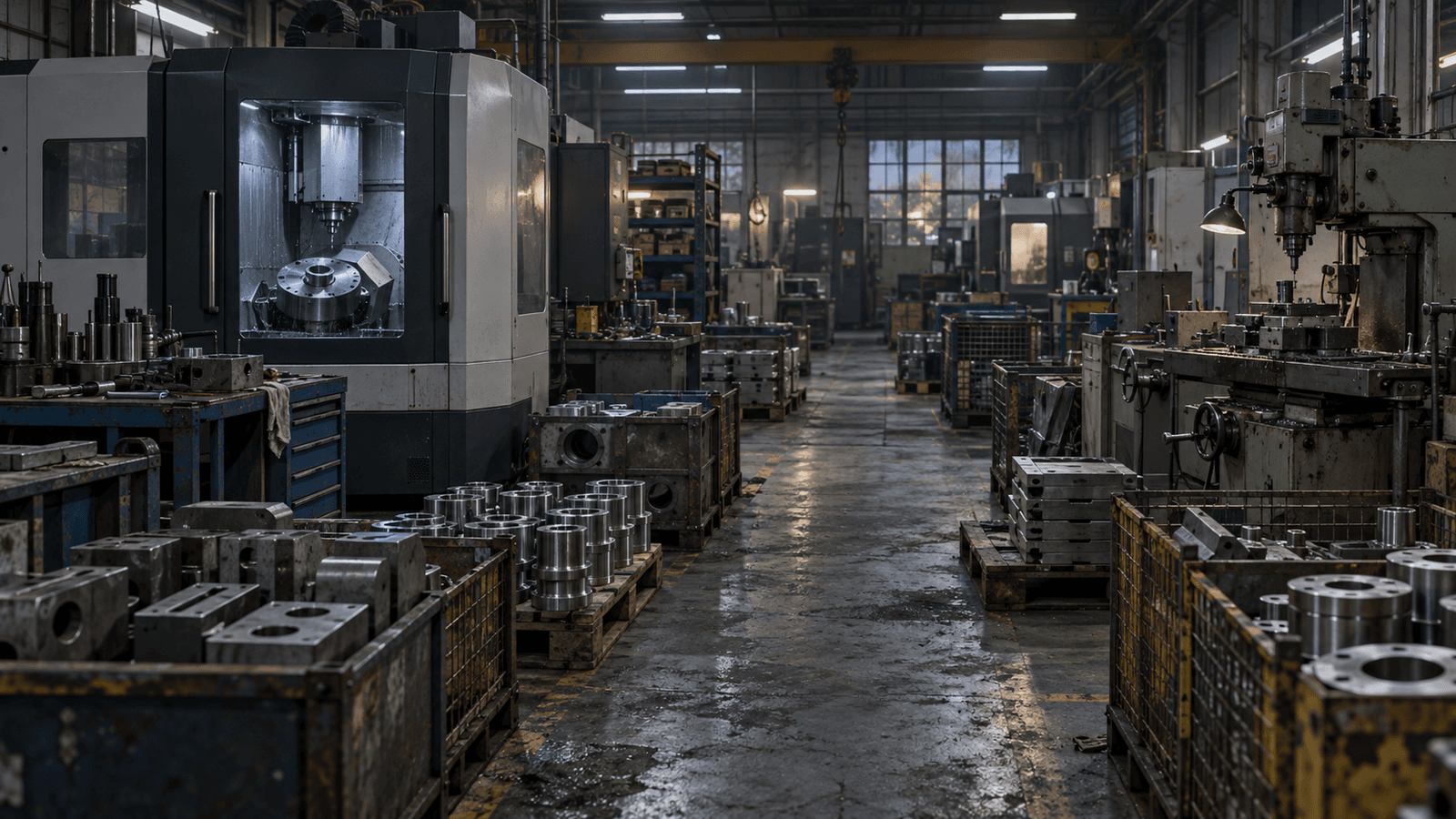
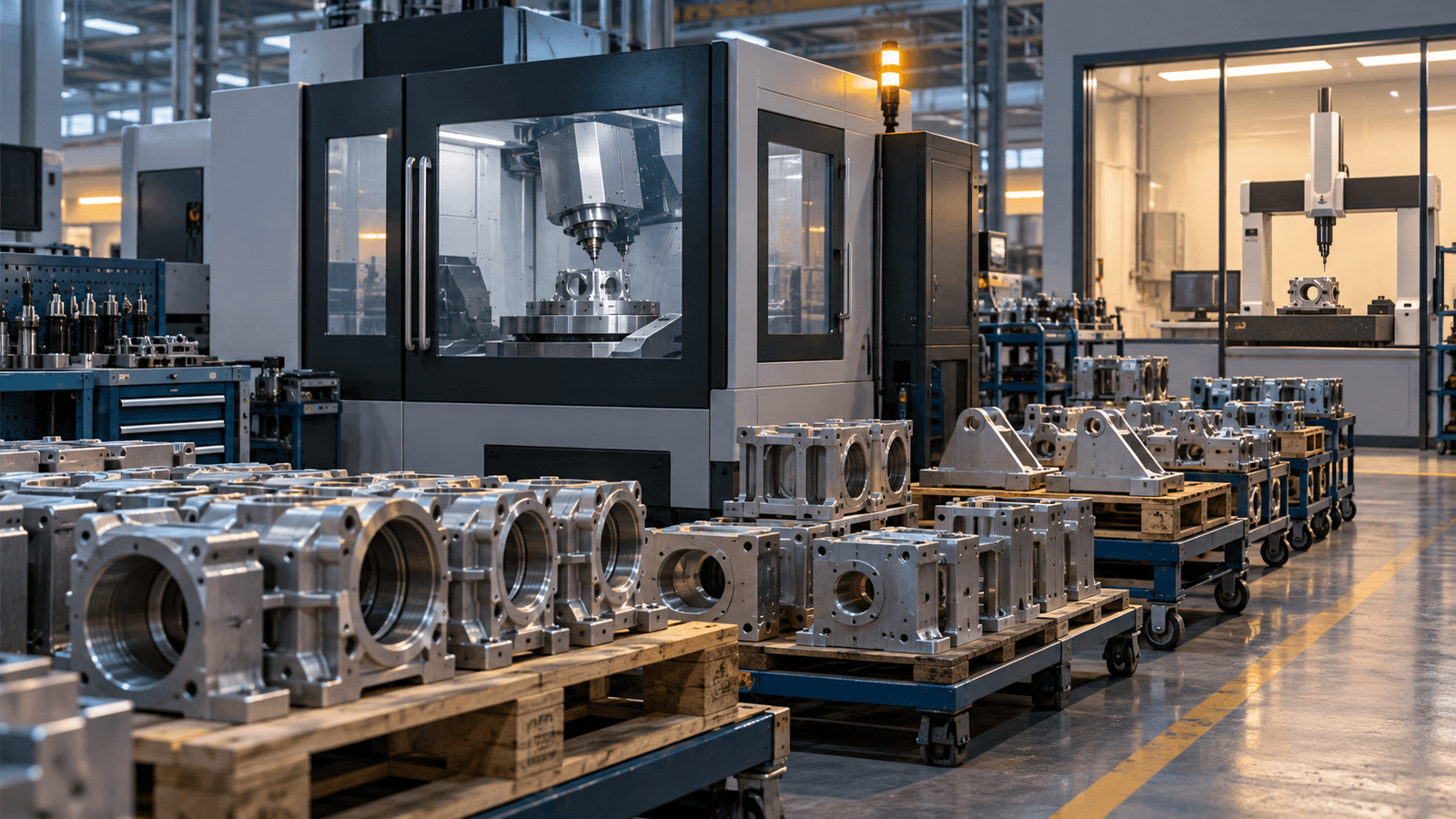
The first episode begins at a precision machining factory four days before shipment.
Everyone in the factory was busy. Yet the parts promised to the customer had still not reached the shipping area. There was a number in the factory's report: 95% utilization. With that number, our first inquiry into manufacturing operations begins.

Join the discussion